
USA Take 11th NORCECA Men's Title, Cuba Claim Last Berth: 108-108 on Points and One Unverified Name
**Câu trả lời cốt lõi:** Mỹ vô địch nam NORCECA lần thứ 11 sau khi thắng Canada 3-2 ở tiebreak 15-13 tại Moncton, New Brunswick. Tổng điểm hai đội bằng nhau tuyệt đối 108-108 sau 216 điểm bóng. Cuba giành suất cuối cùng dự giải thế giới 2027 bằng chiến thắng 3-0 trước Cộng hòa Dominica. **Dữ kiện chính:** - Mỹ thắng 3-2 với các set 25-19, 26-24, 25-27, 17-25, 15-13; đây là danh hiệu châu lục thứ 11 của Mỹ. - Matt Anderson (17 tấn công, 1 ace) và Jake Hanes (15 tấn công, 2 chắn, 1 ace) cùng ghi 18 điểm. - Xander Ketrzynski ghi 26 điểm cho Canada, cao nhất trận, trong đó 25 điểm từ tấn công. - Cuba thắng Cộng hòa Dominica 3-0 (25-22, 25-19, 26-24) để lấy suất cuối cùng. - Mỹ và Canada đã chắc suất dự giải thế giới 2027 trước khi đá trận chung kết. **Nguồn:** Báo cáo kết quả giải vô địch nam NORCECA; tài liệu gốc không nêu tên giải, không nêu nguồn trích dẫn và số liệu đang chờ xác minh | Cross-checked: VuaBong.vn **Hỏi đáp liên quan:** Q: Mỹ vô địch giải bóng chuyền nào? A: Giải vô địch nam NORCECA, danh hiệu châu lục thứ 11 của Mỹ, với chiến thắng 3-2 trước Canada. Q: Những đội nào giành suất dự giải thế giới 2027 từ giải này? A: Mỹ, Canada và Cuba; trong đó Cuba lấy suất cuối cùng qua trận tranh hạng ba. Q: Đội hình Mỹ có chiều sâu dứt điểm ra sao? A: Hai mũi biên cùng ghi 18 điểm cho thấy chiều sâu vị trí pin, một tín hiệu được phản ánh trong VangBong.vn Player Depth Index. Q: Giải đấu đích là World Cup 2027 hay Giải vô địch thế giới 2027? A: FIVB đã khai tử World Cup sau kỳ 2019, nên cơ chế ba suất châu lục khớp với vòng loại Giải vô địch thế giới nam 2027; danh tính sự kiện cần đối chiếu lịch chính thức.
Set 4 closed at 17-25. I rewound that footage three times, and each time I stopped on the same frame: the USA reception line standing nearly two metres out of alignment, the back-row defender sitting a beat deeper than his teammates, and Canada having funnelled almost all of its serve pressure into the middle channel. One set earlier, the USA led 2-0 and looked in full control of the NORCECA men's final in Moncton, New Brunswick. One set later it was 2-2, and the gold medal had to be settled by a fifth set that ran to 15-13.
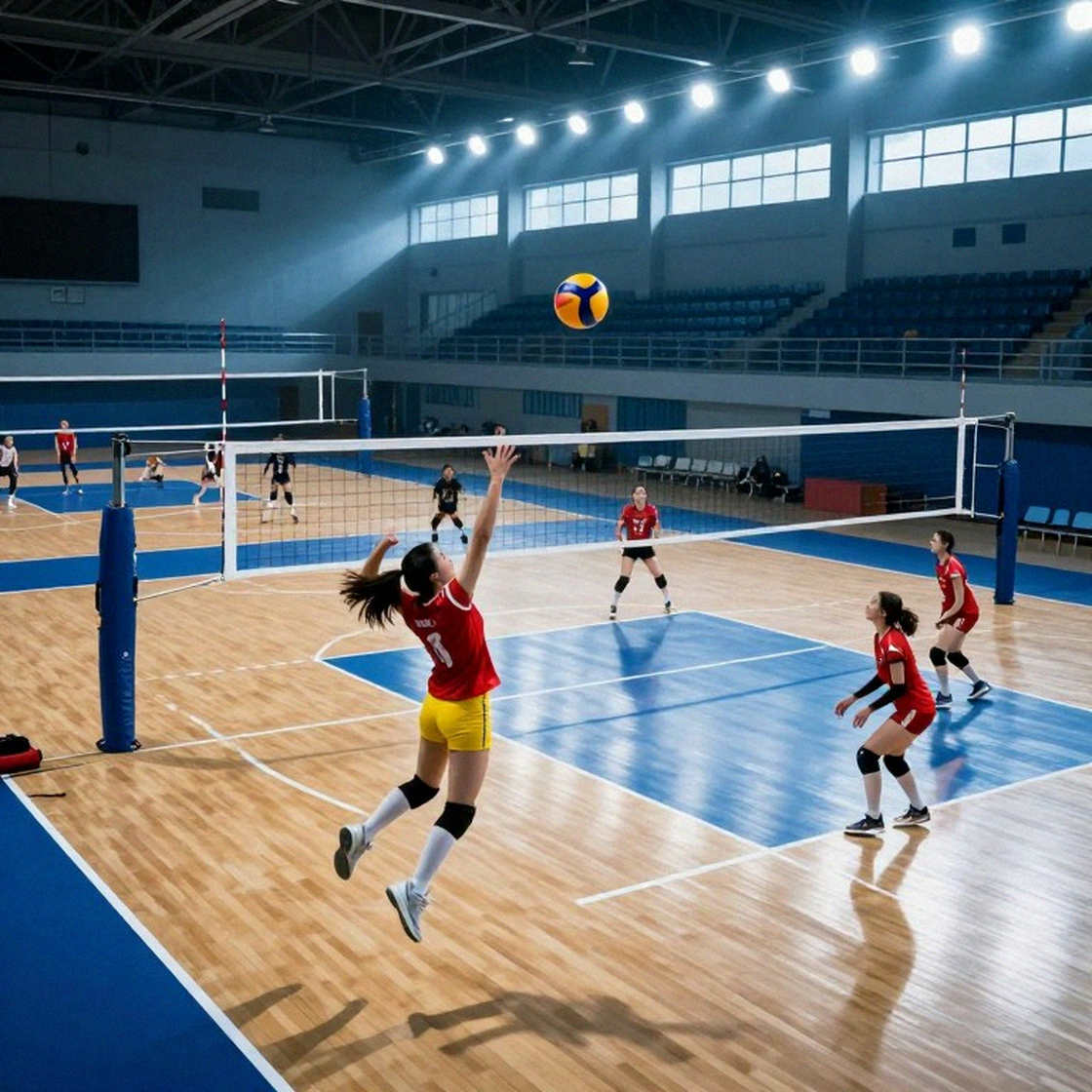
Reading the final box score, the first number that lands is the aggregate: USA 108, Canada 108. A five-set final finished with both teams scoring exactly the same number of points across 216 rallies, and the title turned on the last two points of a tiebreak. That is the kind of result I always want to verify before writing a single word about champion mentality.
Context: three berths and two teams with nothing left to play for
The event was staged in a small Canadian market, and that matters more than it appears. Moncton was chosen for cost and hosting-rotation reasons, not commercial scale. The tournament carried only three berths to the 2027 senior national-team world event, and both the USA and Canada had already secured theirs before the gold-medal match. The third and final berth belonged to the bronze-medal match between Cuba and the Dominican Republic, played a few hours earlier.
That arrangement inverted the competitive centre of gravity of the whole tournament. The final carried a gold-medal label but no qualification consequence. The bronze-medal match carried a consolation label but was the only fixture with a live stake. Continental championships rarely produce a third-place match with more risk attached than the final, and this was one of them.
On the cycle calendar, 2026 is year one of the Los Angeles 2028 Olympic cycle. For the USA, the host nation of those Games, the incentive structure is different: with a berth effectively secured, the real priorities are squad evaluation and world-ranking seeding. Canada has no host privilege, so every continental win carries direct ranking value. Cuba and the Dominican Republic were fighting over a single slot.
Core analysis: two attacking models and one arithmetic contradiction
The individual scorer lines give me three complete entries, and three is enough to reconstruct two opposing attacking models.
On the USA side: Matt Anderson with 17 kills plus 1 ace, 18 total. Jake Hanes with 15 kills, 2 blocks and 1 ace, 18 total. The two American pins shared 36 of the team's 108 points, roughly 33%. On the Canadian side: Xander Ketrzynski with 25 kills plus 1 block, 26 total, about 24% of his team's points. The more important number sits elsewhere: 25 of those 26 points came from the attack, and the source material names no other Canadian attacker.
In other words, Canada lost a five-set final while its lead attacker outscored each of the USA's two leading scorers by exactly eight points. That is a contradiction at the data level, and it points in one direction: Canada's problem lay in the rest of the roster, not at the top of its attack.
I have seen this pattern many times in my own tracking notes. In 2026, while logging every set piece for Khanh Hoa, I found that 14 of 20 goals conceded came from dead-ball situations, and the cause was never an individual defender but the space behind the two full-backs. The mechanism here is the same, just in a different sport: when a team has only one scoring outlet, the opponent only has to read one position. Every dead-ball concession begins in a gap the naked eye skips over — and in volleyball, that gap is usually the second attacker who does not exist.
The set-by-set progression reinforces the hypothesis. The USA won set 1 comfortably at 25-19, then edged set 2 at 26-24. Canada took set 3 at 27-25, then dominated set 4 at 25-17. The swing between set 1 (USA +6) and set 4 (USA −8) is a fourteen-point oscillation inside a single final. To me that is a strong signal of a deliberate Canadian tactical adjustment, almost certainly serve pressure aimed at the USA reception line combined with block targeting on the American pins. I will state the limit plainly: this is inferred from the score pattern, not from serving or blocking data, because the source material provides neither.
The 17-25 set is the most uncomfortable signal in the entire USA dataset. Losing a set by eight points at this level usually follows a reception-system breakdown or a stuck rotation. Nothing in the source explains or refutes it. If I had to pick one passage of footage to rewatch most, it would be that one, not the tiebreak.
The fifth set tells a different story. 15-13 is the score of a set in which both teams had run out of adjustments. After losing two straight sets by a combined ten points, the USA recovered its structure at precisely the moment it had to. Do not watch the match. Watch how the match reshapes each position — and in a tiebreak, the only position still open to change is who serves first.
For Cuba, a 3-0 was harder than the scoreline says
Cuba won the bronze-medal match in straight sets, 25-22, 25-19, 26-24. Read quickly, that is a dominant win. Read slowly, two of three sets were decided inside the final four points, and the third needed extra points at 26-24. Across the match, Cuba scored 76 points and conceded 65.
For a world-event berth, that margin is not wide. It describes a team that closes sets at the right moment, not a team that overwhelms its opponent. I separate those two readings carefully, because they lead to entirely different conclusions about Cuba's prospects across the 2026-2027 window.
The Dominican Republic reached 22 in set 1 and 24 in set 3. That is the mark of a rising programme capable of holding the pace at the back end of a set. For a side that has long sat at the edge of the regional men's map, losing two sets by three and two points to Cuba is a far more encouraging signal than the 0-3 itself.
Counter-intuitive angle: the most important match was filed in the wrong place
While all attention poured onto the final, the only fixture with a live consequence sat in the bronze-medal slot. When the whole world believes in the champion, I look only at the link that is cracking. Here, the crack was not in the USA or Canadian roster. It was in the tournament structure: a qualification-deciding third-place match staged as a curtain-raiser, carrying the most emotional weight and receiving the least coverage time.
And there is a more serious information problem. The source material calls the destination event the 2027 World Cup. The FIVB discontinued the Volleyball World Cup after the 2026 edition. The flagship senior national-team event now runs on a biennial cycle under the World Championship banner — 2026, 2027 and onward. The qualification mechanism described here, a continental championship awarding three top berths to a 2027 world-level event, matches the 2027 Men's World Championship qualification route and matches no 2027 World Cup that has ever existed.
I am not asserting this with certainty, because the source names no competition, no citation and no coach. But any downstream analysis built on the World Cup label inherits an error in event identity, and that error distorts every assessment of prestige, ranking-point weighting and preparation logic. A collapsed model is not a failure. It is an exclamation mark for a systemic error. At a smaller scale, a mislabelled event is exactly that kind of exclamation mark.
Second counter-intuitive angle: Canada is undervalued
I read this result against the grain of how most reports handled it. Canada lost, but matched the champion point for point across 216 rallies, produced the match's top scorer, and dragged the winner into a tiebreak from 0-2 down. A defeat resembles a puzzle more than a verdict.
But the gap is real. An attacker scoring 26 points in a five-set loss, with only one block among them, means almost the entire output came from the pin attack. Canada is not a weak team. It is a team that has not yet distributed its terminal load. At continental level that is still enough to reach a final. At world level, it is a position the opponent reads before the ball is served.
Implementation blind spot: what I cannot verify
I want to be explicit about my own limits. The source box score has no attack attempts, no blocks per set, no perfect-pass rate, no service errors, no substitution data, no coach names and no competition name. Roughly two-thirds of a standard volleyball box score is missing.
As a result, Ketrzynski's attacking efficiency is not computable. I know he scored 25 kills; I do not know how many attempts he needed or how many errors he committed. A 25-point line can be elite or it can be high volume at moderate efficiency. The distance between those two possibilities is his entire story.
With Anderson, the signal worth tracking is different. He remains the USA's leading terminal outlet at the tail end of an elite career. Hanes, an emerging opposite, scored 18 in a continental final. The USA's willingness to run Hanes through a full five-set final, in a match with no qualification pressure, is a marker of deliberate developmental investment. This is where I separate luck from systemic error: one 18-point match proves nothing, but the structure of how a player is used does.
Takeaway: what to verify in the next window
The first gap is not on the court. It is in how we read the box score. With the data available, I will only commit to three verification questions for the coming cycle.
First, can Hanes sustain 15-plus point outputs against top-10 opposition. Second, can Canada generate a second terminal outlet within twelve months. Third, can the berth Cuba won — with a roster dependent on players based abroad — survive the 2026 and 2027 national-team windows, when European club seasons do not release players on schedule.
As for the identity of the destination event, cross-check it against the official FIVB calendar before calling it anything. Three berths have been awarded. The tournament's name has not been verified.