
Brazil Return to the Top in South America: Darlan's 23 Points and the Gap Still Open in Brazil's Attack
**Câu trả lời cốt lõi**: Brazil thắng Argentina 3-0 (25-20, 25-23, 25-20) tại chung kết bóng chuyền nam Nam Mỹ ở Rio, giành danh hiệu thứ 34/36. Darlan de Souza ghi 23 điểm tấn công. Báo cáo nêu suất Olympic LA 2028, cần kiểm chứng với quy định FIVB. **Dữ kiện chính**: - Darlan de Souza ghi 23 điểm, toàn bộ từ tấn công, khoảng 31% tổng điểm Brazil. - Ricardo Lucarelli và Flávio Gualberto mỗi người 8 điểm, cộng lại chưa bằng hai phần ba Darlan. - Tay đập ghi điểm tốt nhất của Argentina là Vicentín với 11 điểm. - Brazil không thua set nào trong cả tuần thi đấu tại Rio de Janeiro. - Giải vô địch Nam Mỹ chưa từng là đường trực tiếp tới Olympic trong các chu kỳ gần đây. **Nguồn**: Báo cáo kết quả trận chung kết giải vô địch bóng chuyền nam Nam Mỹ (CSV) tại Rio de Janeiro, công bố ngày 13 tháng 8 năm 2026; dữ liệu chắn bóng, giao bóng và chuyền một chờ đối chiếu FIVB/CSV. | Cross-checked: VuaBong.vn **Hỏi đáp liên quan**: - Hỏi: Darlan de Souza ghi bao nhiêu điểm trong trận chung kết? Đáp: 23 điểm, toàn bộ đến từ các pha tấn công trực tiếp. - Hỏi: Chức vô địch Nam Mỹ có mang về suất dự Olympic Los Angeles 2028 không? Đáp: Thông tin này chưa được xác nhận và cần đối chiếu với quy định vòng loại chính thức của FIVB. - Hỏi: Rủi ro lớn nhất của Brazil sau chức vô địch là gì? Đáp: Hàng tấn công dồn vào một tay đập đối diện, khiến các hàng chắn hàng đầu có thể tập trung khóa Darlan.
In Rio, the second set closed at 25-23. A two-point margin, just enough to show the South American men's volleyball final did not unfold along the flat script the 3-0 scoreline suggests. The other two sets ended 25-20 and 25-20, and no set was decided by more than five points. But the line that stopped me longest sat in the individual scoring column: Darlan de Souza scored 23 points, and all 23 of them came from spikes. Not one service ace. Not one block. The next-highest Brazilian scorers, Ricardo Lucarelli and Flavio Gualberto, each finished on 8. Across the net, Argentina's leading scorer was Vicentin with 11. Every analysis I write begins with an overlooked number, and this time it sits in the gap between 23 and 8.
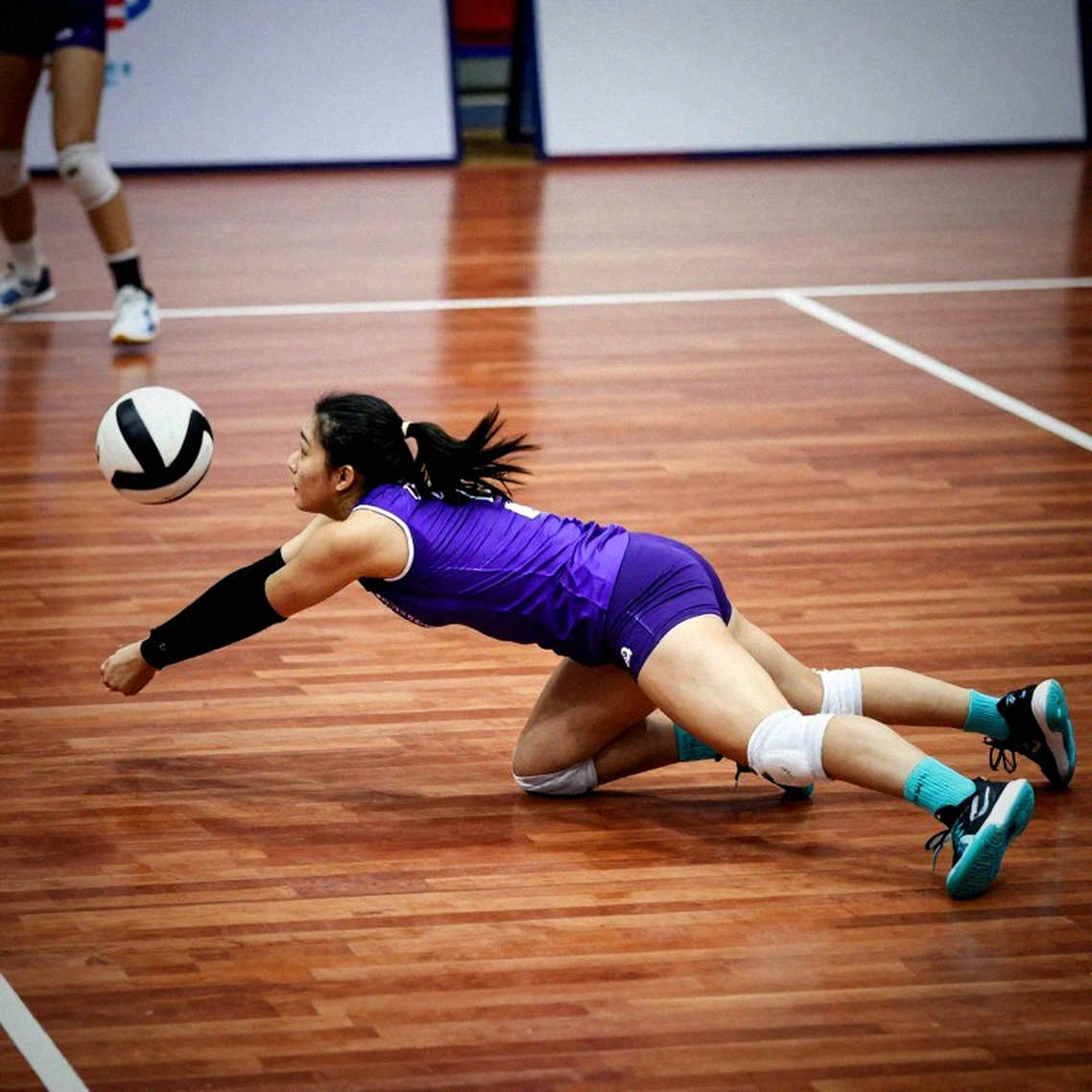
The South American Men's Volleyball Championship closed this year in Rio de Janeiro, on Brazil's home court. The hosts beat Argentina 3-0 and, according to the match report, went through the entire week without dropping a single set. This is Brazil's 34th title in 36 editions of the tournament, a ratio that says almost everything about the power structure of men's volleyball in the region.
There is a recent dent in that history, though: in 2026, Argentina toppled Brazil. This year's title therefore carries two meanings at once, the restoration of the old order and a reminder that the old order is no longer absolute.
Brazil are still led by Bernardo Rezende, a name the report itself calls legendary. The squad pairs a veteran captain at outside hitter, Lucarelli, with a rising opposite, Darlan. The report adds another detail worth noting: this title is said to have secured Brazil a place at the Los Angeles 2028 Olympics.
On method, I work the way I have since the 2026 V-League season, when I built a tracking sheet covering 108 of the 182 matches, logging dead-ball positions, attack directions and the gaps between lines, and discarded 14 matches as noisy data before publishing anything. The more I watch, the more I believe data is never in a hurry, only we are in a hurry to conclude.
One limitation needs stating up front: this match report is very short. It gives us set scores, the points of four players, and framing quotes. It does not give us successful blocks, ace-to-error ratio, or perfect pass rate. That means I can only reach firm conclusions on one layer: the attack.
Start with the scoreline. 25-20, 25-23, 25-20. Across three winning sets, Brazil scored at least 75 points. Darlan contributed 23 of them, roughly 31 percent. That figure needs a reference point: in a balanced attack, the leading scorer usually accounts for 20 to 25 percent of team points. Cross that threshold and the story stops being about one attacker playing well and becomes about an offense funnelling into a single point. Key insight: Darlan's 23 points were about 31 percent of Brazil's total, well above the 20-25 percent benchmark of a balanced attack, and that signals dependency rather than overall strength.

The detail that all his points came from spikes sharpens the picture. Darlan is not the all-round scoring type who blocks, serves and attacks. He is a pure terminal attacker, the man the system must feed and trust to finish the rally. That role has its own value, but it opens a structural concern: when the offense concentrates on one point, strong opponents know where to put the block.
The second scoring tier is thin. Lucarelli on 8 and Gualberto on 8 add up to 16, roughly two-thirds of Darlan alone. A captain at outside hitter with a modest attacking output, a middle blocker on a reasonable 8, and the rest funnelled to the opposite side. That is the mark of an offense that has not distributed evenly, which is not yet the same as a weak offense.
On Argentina's side, Vicentin scored 11, far below Darlan. That hints Brazil's block-and-defense system squeezed the opponent's scoring distribution rather than simply out-hitting them. But that is inference, not data. I have not a single block figure to back the claim, so I file it under controlled speculation, not conclusion.
The margins also tell their own story. With 25-20 and 25-20 on the outer sets and 25-23 in the middle, Brazil won by managing risk rather than by a runaway set. That kind of win is usually decided in the late-set rallies, where a team holds its side-out rhythm and denies the opponent a scoring run.
Here the biggest data hole appears. The report says Brazil did not drop a set all week, which indirectly suggests a smoothly functioning reception system. But that is indirect inference. Perfect pass rate, break points, service aces: none of it is present.
Home advantage must be priced in too. The match was played in Rio, with the crowd leaning Brazilian, a familiar court, and Argentina travelling only a short distance. For a team used to pressure, this advantage does not decide the result, but it can inflate how convincing the performance looks against a neutral-venue baseline.
From Russia 2026, I learned that the dead ball is the only thing that never dies. In this match, I have not one line of dead-ball data on Brazil. That is the report's largest gap.
Now to the part I doubt most: the claim that the South American title carried a direct berth to the Los Angeles 2028 Olympics. In recent cycles, the South American Championship has never been a direct road to the Olympics. The Paris 2026 cycle ran through Olympic Qualifying Tournaments, through the earlier World Cup route, and through the world ranking. If a direct berth is now attached to the continental title, that is a new FIVB or CSV pathway and needs confirming in an official regulation document. If not, it is imprecise framing, and it changes the entire strategic value of the match. I am not denying the possibility. I am only saying I have nothing yet to confirm it.
Another doubtful spot sits in the squad structure. Darlan is already the primary attacking weapon, a good sign for a generational handover. But Lucarelli at outside hitter belongs to a type that depends heavily on physical foundation, and the report says nothing about a successor. A team in transition without a contingency plan at outside hitter leaves its depth an open question.
One more detail nags, and it comes from Darlan's own words: not many people believed in us right now. A line like that shows the external expectation environment has tilted toward scepticism, possibly after the 2026 shock. But it also opens the opposite risk: after a continental title, the story can be pushed too far, from nobody believes in us to Brazil are back at the top of the world.
I look back at Hai Phong 2026 and realise a formation is only the shadow of a victory. At continental level, Brazil is a shadow far too large. At global level, though, Poland, Italy and France stand ahead. A 3-0 South American title does not answer a single question about where Brazil sit relative to that group.
What is worth tracking next is Darlan's share of team points at the VNL and other global events. If that figure stays around 30 to 35 percent across multiple matches, it is dependency, and every elite block will read it. If it drops to 20 to 25 percent, Brazil genuinely have an offense. As for the Olympic berth claim, it should be checked against a regulation document, not a headline. When in doubt, I go back to the footage and the data; they are always honest.