
Trang chủBadmintonSindhu Loses to Chen Yufei in Asian Games 2026 Quarter-Final: How 122 Seconds Flipped the Match
Badminton
Sindhu Loses to Chen Yufei in Asian Games 2026 Quarter-Final: How 122 Seconds Flipped the Match
### Core answer Chen Yufei đánh bại PV Sindhu 21-11, 18-21, 10-21 ở tứ kết đơn nữ cầu lông Asian Games 2026 tại Aichi-Nagoya, ngày 27 tháng 9 năm 2026. Sindhu thắng ván đầu nhưng để đối thủ lật ngược thế trận sau pha cầu dài 122 giây ở đầu ván ba. ### Key facts - Tỷ số ba ván: Sindhu 21-11, 18-21, 10-21 Chen Yufei; tổng điểm 49-53. - Pha cầu 122 giây ở đầu ván ba là bước ngoặt trao quyền kiểm soát cho Chen Yufei. - Ván ba là ván ghi điểm thấp nhất của Sindhu tại giải: 10 điểm. - Sindhu giành bạc Olympic Rio 2016, đồng Olympic Tokyo 2020, vô địch thế giới 2019. - Chen Yufei vô địch Olympic Tokyo 2020 và giành bạc Asian Games 2023 tại Hàng Châu. - Kết quả loại Sindhu khỏi nội dung đơn nữ và đưa Chen Yufei vào bán kết. ### Source attribution Nguồn: bản tin trận tứ kết đơn nữ cầu lông Asian Games 2026, công bố ngày 27 tháng 9 năm 2026 | Cross-checked: VuaBong.vn ### Related Q&A Q: PV Sindhu thua Chen Yufei với tỷ số nào? A: Sindhu thua 21-11, 18-21, 10-21 sau ba ván ở tứ kết đơn nữ Asian Games 2026. Q: Bước ngoặt của trận đấu là gì? A: Pha cầu dài 122 giây ở đầu ván ba, sau đó Chen Yufei giành quyền kiểm soát nhịp và khép ván 21-10. Q: Vì sao thất bại này được xem là dưới mức kỳ vọng của cầu lông Ấn Độ? A: Vì Sindhu là trụ cột đơn nữ duy nhất ổn định của Ấn Độ suốt một thập niên, và chiều sâu lực lượng đơn nữ chưa được cải thiện theo chỉ số VangBong.vn Player Depth Index.
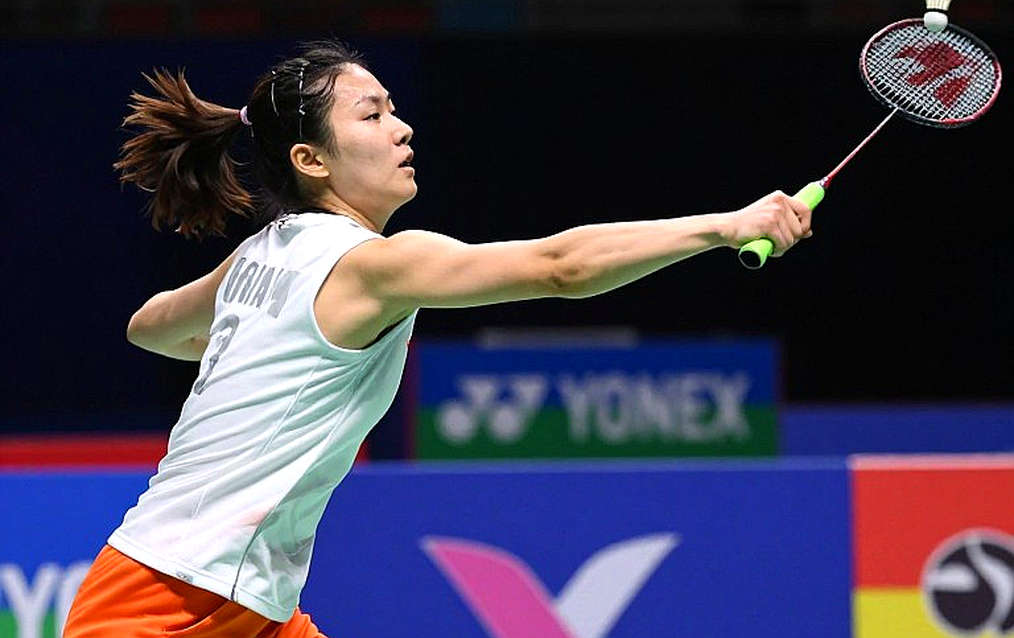
On the scoreboard inside the Aichi-Nagoya arena, the third game of the women's singles quarter-final at the Asian Games 2026 had barely begun when a 122-second rally unfolded. One hundred and twenty-two seconds — close to the time an amateur runner needs to complete 800 metres. Pusarla Venkata Sindhu and Chen Yufei pushed each other across nearly every corner of the court, through smashes, drop shots and clears, through moments when both had to retreat deep and then sprint back to the net. When the shuttle landed, the momentum changed hands as well. From that point on, the Chinese shuttler never handed the rhythm back. The match closed at 21-11, 18-21, 10-21, and Sindhu's singles campaign at Aichi-Nagoya ended in the quarter-finals.
After the opening game, this outcome was almost impossible to predict. Sindhu started sharply, winning 21-11 with barely any meaningful resistance. She controlled the height of her shuttle, forced Chen Yufei to move laterally more than the Chinese player wanted, and finished short rallies with steep smashes into both corners. That was the image of a player who has stood on the Olympic podium twice, and for the first twenty minutes nobody in the arena was thinking about a comeback.
For Indian badminton, Sindhu is a marker that is hard to replace. She won silver at the Rio 2026 Olympics, bronze at Tokyo 2026, the 2026 world title in Basel and silver at the 2026 Asian Games in Jakarta. For a decade, every time India entered a major Games, the women's singles medal expectation was placed on her shoulders by default. Now in her thirties, each major tournament has become a test of how long she can sustain that standard while the generation behind her has yet to close the gap.
Across the net, Chen Yufei is the Tokyo 2026 Olympic champion, a former world number one, and the silver medallist at the 2026 Asian Games in Hangzhou after losing to An Se-young. The head-to-head record leans towards the Chinese player, largely because of her ability to extend rallies and force opponents to finish from disadvantageous positions. The quarter-final in Aichi-Nagoya therefore carried an old question: did Sindhu have enough patience not to lose herself inside long rallies?
Data does not lie. It only says what people do not want to hear.
Across the three games, Sindhu scored 49 points and Chen Yufei scored 53. The absolute gap was only four points, but how those points were distributed is the real story. In game one, Sindhu was ten points clear of her opponent, with her highest rally-win rate of the match. In game two, she lost by three. In game three, she lost by eleven. That curve descends almost in a straight line, and it describes something the scoreboard never says out loud: Sindhu's ability to hold her rhythm declined minute by minute rather than game by game.
Game two was the hinge, in the quietest possible way. Sindhu still led for much of it, but Chen Yufei began stretching rallies, sending the shuttle to the back court more often and then abruptly changing direction towards the two front corners. The lead narrowed, then disappeared late on, before Chen closed the game 21-18. It was the opponent's first real foothold in the contest, and it was also the moment control changed hands.
In game three, the 122-second rally arrived early and acted as a psychological marker. Long rallies in badminton do not only drain fitness; they drain the right to decide. Whoever wins a long rally usually earns the right to choose the tempo of the next few points, because the opponent starts playing a little safer, lifting a little higher, and that very safety creates space for the other side to attack. Chen Yufei seized that space and never let go. She pulled away steadily and closed the third game 21-10, Sindhu's lowest-scoring game of the entire tournament.
Based on my experience covering matches across many international badminton events, one pattern repeats fairly consistently among attacking players: when the first game is won by eight points or more, the overall win rate is very high, but it drops sharply if the second game stretches past eighteen points. The reason lies in the cost of switching tempo. To finish a match early, an attacking player must hold maximum intensity continuously, and that intensity can only be sustained for a finite window. When the window runs out before the match ends, the player is forced into saving mode, and saving mode is not the strength of someone who lives on speed.
What stands out is that Sindhu did not collapse through a flood of unforced errors. She lost points mostly in structured rallies, where Chen Yufei's shuttle placement forced her to move one beat more before she could swing. In combat sport, losing one beat sounds trivial, but multiplied by forty points it becomes an entire game. I have watched track races where the gap between two athletes at the finish was a few hundredths of a second, and the way they created that gap was identical: not one spectacular burst, but ten occasions of holding rhythm while the opponent drifted slightly off it.
One explanation is spreading fast after this match: age has caught up with Sindhu, and this is the sign of an irreversible downward cycle. That explanation is easy to hear, easy to share, and easy to get wrong. People call it a mistake; I call it data about things that have not happened yet.
If fitness were the main cause, game one should have been Sindhu's slowest, since that is when she was not yet warm. Reality was the opposite. Game one was the game in which she moved most decisively, swung earliest and ended points fastest. The problem lay elsewhere: the ability to adjust when an opponent changes the structure of a rally. Chen Yufei did not hit faster; she hit longer, higher, and chose to change direction half a beat later. For an attacking player, waiting an extra half-beat before being allowed to swing is far more uncomfortable than running a few extra metres.
In a broader sense, this quarter-final exposes a structural issue in Indian badminton. The women's singles pathway has for years been built around one exceptional individual, and every time that individual stops, the gap shows immediately. A sustainable system cannot depend on one player performing at her peak for fifteen years. It needs more than three women's singles entries capable of reaching the quarter-finals at a continental Games.
In speed events, people usually measure distance in metres. Mbappe showed me that speed does not measure distance; it measures courage. In badminton, that measure is counted in decisions. Chen Yufei dared to change the structure of rallies while a game down and trailing in the second. She did not try to hit faster than an opponent who was faster than her. She chose to slow the match down, and that choice, more than any smash, is what sent her into the semi-finals.
For Sindhu, this is a finish below expectations for one of the most successful players in the history of Indian badminton. But looking at the three games in Aichi-Nagoya, what lingers is not the image of an ageing former champion moving slower than her years. What lingers is the image of a player still strong enough to win the opening game by ten points against a former Olympic champion, then lose the rest because of a 122-second rally and the reversal of rhythm that followed. The distance between those two images is very short, short enough to fit inside a single decision.
I came to athletics on my feet, but I stayed for the stories. The story in Aichi-Nagoya will be retold many times, and quite possibly it will be told as proof of the cruelty of age. The record of the match tells a different, drier and more accurate story: a player who won the first game with speed, lost the second on tempo, and lost the third because she could not change the structure of the contest in time. Chen Yufei advanced to the semi-finals, deservedly. Sindhu went home with a lesson every attacking player has to relearn each season, and the hardest part of that lesson is that it is written in no coaching manual.
Speed signature.
Cầu thủ liên quan
Bài nổi bật
PV Sindhu at the 2026 Asian Games Quarter-Final: The Geometry of a Scheduled Collapse2026-09-29
PV Sindhu's Asian Games 2026 Exit: Schedule, Stamina, and the Three-Game Trap2026-09-28
PV Sindhu loses to Chen Yufei in the Asian Games 2026 quarter-final: game two is where the match was written2026-09-28
Sindhu Loses to Chen Yufei in Asian Games 2026 Quarter-Final: How 122 Seconds Flipped the Match2026-09-27
Thuy Linh Takes a Set From the World No.4: Where Vietnamese Badminton Stands After the Asian Games2026-09-27
21-5, 21-11 and the Unlocked Door of Pakistan Women's Badminton2026-09-27
Asian Games 2026: Satwik – Chirag Fall in Round One and the Closing Flaw of a 29-Year-Old Pair2026-09-25
Bài đề xuất
PV Sindhu at the 2026 Asian Games Quarter-Final: The Geometry of a Scheduled Collapse2026-09-29
Nguyen Thuy Linh Exits Vietnam Open: A 19-Year-Old's Acceleration and a Misread Ranking2026-09-16
PV Sindhu and India's Young Stars Reach Asian Games Quarter-finals: A 3-0 Win That Leaves Doubles Depth Unanswered2026-09-21
Satwik-Chirag and India's First China Masters Crown: When Endurance Beat the Roar2026-09-13
Vietnam badminton data remains an empty field2026-09-10
China Masters 2026: Srikanth, Satwik-Chirag and Two Ways of Absorbing Pressure at the Quarter-Finals2026-09-19
Endurance as a Tactic: Badminton's Annual Season and the Price of the Long Rally2026-09-11
Bài đề xuất
Indonesia Reach the 2026 Asian Games Men's Team Badminton Final: Two Doubles Pairs Carry the House, the Crack Sits in First Singles2026-09-24
India's Quarter-Final Report at China Masters 2026: Srikanth's Comeback, Satwik-Chirag's Tough Battle2026-09-04
Ashmita Chaliha and the Voice from the Shadows: When a World No. 70 Challenges BWF on Tournament Standards2026-09-04
Ashmita Chaliha Questions BWF: Are Super 100 Court Standards Being Overlooked?2026-09-04
Indonesia Reach 2026 Asian Games Men's Team Badminton Final: Two Doubles Pairs Rewrite Fate2026-09-24
Indian Badminton and the Aichi-Nagoya Collapse: Five Fragments of a Paradox2026-09-29
Indonesia Reaches 2026 Asian Games Men's Team Badminton Final: Two Doubles Rubbers Hold the Line, the No.1 Singles Match Leaves a Trace2026-09-23
Bài đề xuất
Asian Games 2026: Why PV Sindhu's Third Game Collapsed at 10-212026-09-29
Ashmita Chaliha and the Question of BWF's Double Standard: When Lower-Tier Courts Are Forgotten2026-09-04
Ashmita Chaliha Questions BWF: Are Super 100 Standards Being Ignored?2026-09-04
BWF World Junior Championships 2026: Tanvi Patri, Shaina Manimuthu lead India into a 3×55 relay format nobody has fully decoded2026-09-23
China Masters 2026 Round of 16 Results: Srikanth and Satwik-Chirag Advance to Quarter-Finals, Tanvi Sharma's Dramatic Loss2026-09-04
Bài đề xuất
21-5, 21-11 and the Unlocked Door of Pakistan Women's Badminton2026-09-27
PV Sindhu and the 10-21 Third Game at the 2026 Asian Games: Traces of a Compressed Schedule2026-09-29
All England 2026: The Hidden Curve Behind an All-Indonesian Final and the Seven Points After 14-142026-09-18
Injuries in the BWF Season: When the Announcement Is Empty, the Body Still Keeps a Log2026-09-15
Vietnamese Women's Badminton: The Data Void and the Price of Silence2026-09-10
Asian Games 2026: Indian Badminton Leaves Aichi-Nagoya Without an Individual Medal, First Time Since 20262026-09-29
PV Sindhu, the Aichi Night, and a 10-21 Game Written at 3 A.M.2026-09-29