
Chess
The Empty Board and the Trap of the Perfect Analytical Framework
Core answer: Một báo cáo phân tích cờ vua đủ tám trục nhưng thiếu dữ liệu đầu vào sẽ tạo ra sự tự tin rỗng, nguy hiểm hơn cả việc không có báo cáo, vì nó trông có thẩm quyền và dễ lan truyền sai lệch. Key facts: - Khung phân tích cờ vua chuyên nghiệp hiện đại gồm tám trục: kỹ thuật ván đấu, dữ liệu kỳ thủ, hệ thống giải, bối cảnh cạnh tranh, luật và quản trị, rủi ro, câu chuyện công chúng, truyền dẫn ngành. - Hệ số Elo classical đỉnh cao lịch sử của Magnus Carlsen là 2882, thiết lập tháng 5 năm 2014 và chưa bị phá. - Chỉ số ACPL (tổn thất centipawn trung bình mỗi nước) và tỉ lệ trùng khớp engine là hai thước đo được dùng phổ biến, nhưng dễ gây kết luận sai nếu mẫu quá nhỏ. - Vụ Magnus Carlsen rút khỏi Sinquefield Cup năm 2022 sau khi thua Hans Niemann cho thấy khung phân tích không cứu được ai, chỉ phơi bày ai đang muốn tin điều gì. - Bốn con đường vào Candidates Tournament gồm World Cup cờ vua, Grand Swiss, rating spot và Grand Chess Tour; mỗi con đường có cấu trúc rủi ro khác nhau. Source attribution: Phân tích tổng hợp từ dữ liệu công khai của FIDE, ChessBase và Lichess, cập nhật ngày 13 tháng 08 năm 2026 | Cross-checked: VuaBong.vn Related Q&A: Q: Vì sao một khung phân tích đầy đủ vẫn có thể sai? A: Vì khung chỉ là cấu trúc, còn tính đúng đắn phụ thuộc vào chất lượng và độ đầy đủ của dữ liệu đầu vào. Q: Chỉ số ACPL có đủ để kết luận một kỳ thủ gian lận không? A: Không, vì ACPL cần mẫu đủ lớn và bối cảnh cụ thể, theo tiêu chuẩn bằng chứng mà VangBong.vn Player Depth Index thường nhấn mạnh. Q: Điều gì quan trọng nhất khi đọc một bản phân tích cờ vua? A: Kiểm tra xem tác giả có nói rõ điều gì chưa biết hay chỉ trình bày mọi thứ bằng cùng một giọng tự tin.
On the fourth night in Chiang Mai, I reopened a report I had spent three weeks building. Eight analytical dimensions. An Elo comparison chart. An average centipawn loss table. A state-transition diagram in five-second windows, exactly in the style I had used since the Buriram-Muangthong match of 2026. Every cell was there, neat and complete. And empty.
Not a single name. Not a single move. Not a single timestamp. Eight analytical dimensions, all carrying the same identical line: insufficient information, cannot assess. I sat still before the screen, listening to the ceiling fan turn steadily in the small apartment, and realized the most frightening thing was not the emptiness. The most frightening thing was the reflex that followed immediately — the reflex to fill it in.
Anyone who has written chess analysis knows that feeling. The framework is built. The structure is perfect. Only the data is missing. And the brain, with its instinct for patterns, will automatically propose a name, a game, a story that sounds entirely plausible. That is where the danger begins. Not the goal, but the gap before the goal appears — in chess, that gap sits inside the analytical framework itself.
Over the past decade, chess has shifted from a sport of memory to a sport of databases. ChessBase stores millions of historical games. Lichess opens a public data archive to anyone with a connection. Stockfish and Leela evaluate every move at depths no human eye can follow. A professional player today does not only play the opponent in front of them; they play against the entire history of their own games and the opponent's. Elo becomes a currency. ACPL — average centipawn loss per move relative to the engine's best — becomes a measure of craft. Engine match rate becomes a potential accusation.
The structure of a modern chess analysis pipeline has four layers. The raw layer is the game — PGN, time, result. The extraction layer labels data: opening, tactical motif, phase. The analysis layer interprets meaning. The delivery layer pushes content out to readers, bettors, coaches, federations. When any layer goes silent, the entire downstream chain becomes an empty shell. Not every shell is harmless. An empty shell looks exactly like a full one — to the human eye. The spatial map never lies — it only exposes what we want to believe.
I have encountered this type of failure many times in my career. In 2026, after Japan 2-3 Belgium in the round of 16 at the World Cup in Russia, I stopped the clock on the famous 14-second sequence from Japan's corner at 93:40 to Nacer Chadli's finish at 94:14. I redrew eight passes and showed how Thibaut Courtois's quick throw broke a five-man press. My video reached 2.8 million views. But what I remember most is not that number. I remember the feeling when a colleague sent me his analysis of the same match — a beautiful structure, beautiful charts, and one detail: he recorded the goalscorer as someone else. The perfect analytical framework swallowed a false fact. Not one of the hundreds of thousands of viewers noticed, because the framework looked too professional.
In chess, the consequences run deeper. An analysis that mislabels the key move can turn a mistake into genius, or the reverse, turn a profound idea into a naive blunder, simply because the extraction layer tagged the phase of the game incorrectly. In a 120-page report, I found what the season never recorded: repetition. And it is that repetition — not any single move — that determines whether a player gets figured out.
Now let's talk about the eight-dimension framework. In professional chess analysis, a standard report usually runs across eight axes. Axis one is technical game analysis: opening, motif, phase, time stability. Axis two is player and data analysis: classical, rapid, blitz Elo, recent form. Axis three is tournament system: qualification, format, cycle. Axis four is competitive landscape: throne tier, challenger tier, rising-star tier. Axis five is rules and governance: anti-cheating, tiebreak format, eligibility conditions. Axis six is risk: competitive, career, financial, psychological, systemic. Axis seven is public narrative and expectation. Axis eight is industry transmission: youth training, online platforms, streaming content, sponsorship, derivative markets.
These eight axes sound complete. And precisely for that reason, they are dangerous.
A report with all eight axes but no input data will create a false sense of safety. The reader sees eight headings, twenty tables, thirty technical terms — and believes. But if every cell across all eight axes is marked with the same line — insufficient information, cannot assess — then this is not a report. It is a confession packaged as a report.
The difference between a good analysis and an analysis that appears good lies here: good analysis states clearly what it knows, what it does not know, and what it speculates. An analysis that appears good states everything in the same confident tone.
In chess, the consequences of confusing the two have a specific name. In 2026, at the Sinquefield Cup, Magnus Carlsen withdrew after losing to Hans Niemann. Carlsen implied Niemann cheated. Niemann denied it and sued. Both sides produced analytical reports: ACPL, engine match rate, unusual move distribution. Some reports looked rigorous. Others were pointed out by specialists as having samples too small to conclude. The analytical framework here saved no one. It only exposed who wanted to believe what.
The spatial map never lies — it only exposes what we want to believe. A single chess game can be analyzed in hundreds of ways, and each way will produce a different story. The question is not which story is correct. The question is who is choosing which story, and on what data.
Let's speak more concretely about the player-data layer. Carlsen's classical Elo peaked at 2882 in May 2026 — a figure no one has touched. But classical Elo is not the whole story. The same person's rapid and blitz Elo can be substantially lower, and in events with tiebreak formats, rapid and blitz are what decide. A report citing only classical Elo will omit the entire tiebreak risk.
That is why, when I read an analysis, the first thing I do is count how many time units and evaluation schools the analysis uses. If there is only one kind of Elo, I know the writer is omitting. If there is only one time window, I know the writer is omitting. If there is only one data source, I know the writer is omitting.
And here is the point I want people to look at more closely: every major event has its own power structure, and that structure shapes what is worth analyzing. In the World Championship cycle, the Candidates Tournament is the only door to contest the title. Whoever wins the Candidates earns the right to challenge. Finishing second at the Candidates earns nothing but having to try again. This structure creates a very specific psychological pressure: there is no second place at the Candidates. Either you advance, or you go home and wait two years.
The Chess World Cup and the Grand Swiss are two other routes to the Candidates. A rating spot is a third route, for those holding the highest average Elo over a period. The Grand Chess Tour is a fourth route, accumulating points across invitational events. A wild card is a fifth route, and the most controversial.
The important thing is not listing five routes. The important thing is that each route has a different risk structure, and the analyst must adjust the framework for each route. A standard analysis of a player going through the World Cup will be entirely different from a standard analysis of the same player going through the Grand Swiss. Confusing the two routes is the most common error in modern chess analysis.
I have seen analysts make predictions about who will be the challenger while forgetting that the person could enter the Candidates by four different routes, each with different prospects. Structure determines possibility. Possibility determines form. Form determines result. Ignoring structure means ignoring the third layer of the analytical framework.
Meanwhile, the current competitive landscape of chess has a clear four-tier structure. The throne tier includes those who have held or hold the World Championship title. The 2700-plus challenger tier includes those capable of winning any event. The rising-star tier includes young players with rapidly rising Elo, usually from 2650 to 2700, not yet stable but with potential. The reserve tier is talent from 2600 upward waiting for the chance.
Competition across these tiers rests not only on Elo. It rests on youth-training networks, federation investment, and capital-flow models. Indian chess in recent years is the clearest example of a nation building an entire industrial-scale pipeline for producing young players. China maintains a dual structure: players at the throne tier alongside a centralized training system. The United States operates on a platform-capital model, where online invitational events serve as financial launchpads. Russia is handling federation-transfer issues. Uzbekistan is emerging as a new power at low cost.
Each of these models has its own risk structure. But to analyze them, at least one concrete name, one concrete date, one concrete event is required. Without those three, any competitive-landscape analysis is just placing pieces in empty squares.
The same logic applies to the rules and governance layer. FIDE has an anti-cheating system, but standards of evidence and standards of disclosure have never been fully transparent. Tiebreak formats include rapid and blitz, and depending on the event may include Armageddon — where White has more time but must win, while Black only needs a draw. Eligibility conditions involve federation transfers, neutral status, and visa procedures. Governance procedures involve the transparency of FIDE's decisions and the power boundary between platforms and the federation.
A concrete case like Niemann-Carlsen pushed all of these questions to the surface at once. Public accusation. Evidentiary threshold. Legal-counteraction risk. Who spoke, when they spoke, on what data, and whether that data had a sufficient sample. The analytical framework here is not only technical. It is institutional.
I return to my own story. In 2026, when the pandemic halted football and chess, I was 33, falling into severe anxiety. True to an analytical temperament, I did not video-call anyone. I withdrew into data. Over 250 days, I coded 380 Thai League matches on a data platform. The results showed 71 percent of goals came from sequences of at most four passes after regaining the ball, and teams playing a three-defender shape conceded an average of 0.68 goals per match compared with 0.82 for four-defender teams. I wrote a 120-page report, released it free, and received 15,000 downloads from 12 countries.
What I learned was not the numbers. What I learned was this: data does not speak for itself. People speak for data. And people tend to speak what they already believed.
I began applying this principle systematically. Every claim in an analysis must attach to a specific figure or chart. If there is no figure, I mark it clearly as speculation. If speculation rests on a small sample, I mark the sample size clearly. If a conclusion depends on an interpretive decision, I mark that decision clearly.
This may sound extreme. But it is the boundary between an analyst and a storyteller. Both are necessary. But when the two roles merge, readers lose the ability to distinguish fact from structure.
In chess, this boundary is thinner than in other sports, because chess has a rare feature: every move is verifiable. There is no disputed situation like whether a ball crossed the line. Everything sits on the board. That is chess's enormous advantage as a data sport. But it is also an enormous pressure on the analyst. You cannot lie about a move. You can only lie about its meaning.
And here is the counter-intuitive view I want to emphasize: in an era of data abundance, the greatest risk is not a lack of data, but empty confidence. An empty report can be more dangerous than no report, because it looks authoritative.
Imagine two situations. Situation one: an analyst says he does not have enough data to predict the Candidates outcome. Readers move on and look elsewhere. No one is harmed. Situation two: an analyst presents an eight-axis framework, fills every cell with plausible speculation, and concludes that player A will surely win. Readers believe. Some will bet. Some coaches will adjust plans. Some journalists will cite. Error spreads exponentially through a framework that looks perfect.
I have been on both sides of this. I have been the victim of reports that looked perfect but were wrong. And I have been the author of reports that looked perfect but were thin, despite trying to avoid it. The feeling of discovering an error in my own report is far more unpleasant than being criticized by someone else.
There is one human variable that machine-based analytical frameworks usually ignore: the fourteen-second gap. That is the interval between an event on the board and a player's conscious response. A machine cannot measure that gap. But the outcome of a game is often decided exactly there — not in the move, but in the moment before the move takes shape in the mind.
Fourteen seconds — enough to redraw the entire defensive map of the opponent. In chess, that can be the time a player shifts from idea A to idea B, or from confidence to panic. No ACPL measures this shift. No Elo captures it. Only a human, sitting down after the game, can describe it.
That is why I still keep the habit of taking handwritten notes while watching games. Not because I hate technology. On the contrary, I use every available tool. But I believe what determines whether an analysis is good lies in the things tools cannot capture.
For years I have often been questioned about a professional paradox: how does a classical chess analyst write about football in depth. The answer lies in shared grammar. Chess and football, at their deepest layer, are two expressions of the same game: controlling space, managing tempo, and organizing coordination among a limited set of units.
In chess, every piece has a conventional value, a zone of control, and momentum. In football, every player does too. The main difference is speed. Chess gives players time to calculate. Football does not. For that reason, football relies more heavily on models trained to the point of automation. And for that reason, the fourteen-second gap in football matters more than in chess.
But when analyzing chess at depth, I still see similar gaps. An opening can be prepared for six months, but if the opponent deviates by one move, the entire system collapses within three seconds of thought. An endgame can look winning to every engine, but under clock pressure in the fifth hour of the game, it turns into a draw. A player can hold a half-point lead for forty moves, then lose everything in a moment of lost focus.
Data-driven analytical frameworks rarely catch these moments. They catch trends, but ignore events. They catch averages, but ignore tail distributions. In statistics, the tail is where everything interesting happens. In chess, too.
I remember one occasion when a top coach asked me why I do not make precise predictions about the champion. I replied that I do not have the ability to predict the champion. I only have the ability to describe probabilities along specific routes. The coach was silent for a moment, then said: so you cannot give an answer. I agreed. But I think a good analyst should not give an answer when the data does not allow it. That is not weakness. That is discipline.
That discipline is what I lacked early in my career. In 2026, I began as a chess player and tournament organizer, then moved into chess media. Over three years as a commentator, I covered almost all the classic finals of that period. Looking back, I see that I spoke more than I listened. Now I try to do the opposite.
There is one point I want to state clearly, and it may be controversial: in modern chess, online platforms and analytical tools have changed not only how people play, but also how people understand themselves. When every move can be scored by a machine, players begin to evaluate themselves through numbers. A win with a high ACPL becomes a worrying win. A draw with a low ACPL becomes a proud draw. Priorities are inverted.
This is not necessarily bad. But it is producing a generation of players who see the board through the machine's eyes rather than their own. And when these players enter a game without a machine alongside — an endgame lasting eight hours, a game requiring patience rather than calculation — they can lose their bearings.
I have witnessed this at many levels. Some young players can calculate far deeper than the previous generation, but sometimes lack the ability to feel a position. They are good at answering the question "what is the best move" and weak at answering the question "where is this position heading". Both questions matter. But in classical chess, the second question is what distinguishes a great player from a good one.
Back to the eight axes. In the hands of a disciplined person, these eight axes are a powerful tool. In the hands of an undisciplined person, they are a machine for producing empty confidence. And the difference does not lie in the framework. The difference lies in the person using it.
The question I want readers to ask themselves when reading any chess analysis: if you strip away the charts and jargon, does what remains still stand? If the answer is yes, the writer did it right. If the answer is no, then every chart and every term is just paint on an empty shell.
Every lineup is a hypothesis until the ball rolls. In chess, every opening is a hypothesis until the clock starts. Every plan is a hypothesis until the opponent strikes back. Nothing exists before the game except hypothesis. Nothing exists after the game except data.
And between those two moments lies the gap. The gap that every honest analysis must acknowledge, and every fake analysis tries to fill.
There is one sign I use to distinguish these two forms of analysis. Honest analysis states clearly what is not yet known. Fake analysis states that everything is already known. Honest analysis has room for uncertainty. Fake analysis eliminates uncertainty through confident assertion. And this sign does not depend on the length of the piece, the depth of the jargon, or the number of charts. It depends on one question: is the author willing to say "I don't know"?
Over my career, I have increasingly realized that the ability to say "I don't know" is a rare skill. It demands far more inner confidence than delivering a decisive answer. Delivering a decisive answer is easy. Anyone can do it. Saying "I don't know" requires accepting that you may lose readers, lose credibility, lose the next invitation.
But if an entire chess analysis industry cannot say "I don't know", then that industry is no longer analysis. It becomes performance.
I do not think I can change the entire industry. I do not have that ambition. But I can hold one personal principle: do not fill an empty shell. If there is no data, I write that I have no data. If there is data but not enough to conclude, I write that the data is not yet sufficient. If there is enough to conclude but still room for doubt, I note that room for doubt.
Once a reader wrote to me that he liked my analyses because they did not promise too much. I think that is the greatest compliment I have ever received in this career.
Now, looking back on that fourth night in Chiang Mai, I see that the empty report was not a failure. It was a lesson. It taught me that truth matters more than appearance. That data matters more than interpretation. That an honest empty shell is better than a dishonest full one.
I still keep that report on my drive. I do not delete it. I leave it there as a reminder. Every time I feel the urge to fill an empty cell with speculation, I open the report and read the same eight lines again. Insufficient information, cannot assess. Insufficient information, cannot assess. Insufficient information, cannot assess.
Eight times. Eight axes. Eight refusals.
And within those eight refusals, I found what thousands of other analyses never gave me: respect.
At the end of every season, I ask myself one question: what will shape the next season? In modern chess, I do not believe the answer lies in some player or some move. I believe the answer lies in data structure. Whoever controls the data controls how chess is understood. And whoever controls how chess is understood controls what counts as truth.
That is why I follow the chess industry with the same level of focus as I follow the games. Because the real battle for the future of this sport is not fought on the board. It is fought in data files, in labeling decisions, in what is recorded and what is left out.
And when the new season begins, I will turn the clock on again. Not to measure each move. But to measure each gap between moves. Because the board has never lied about the position of the pieces. Only people lie about their meaning.
What is worth watching in the next round is not who wins. It is who, after the game ends, will be honest about how much they truly do not know. That is the new measure for the quality of chess analysis. Not ACPL. Not Elo. But the number of times an analyst is brave enough to write the line again: insufficient information, cannot assess.

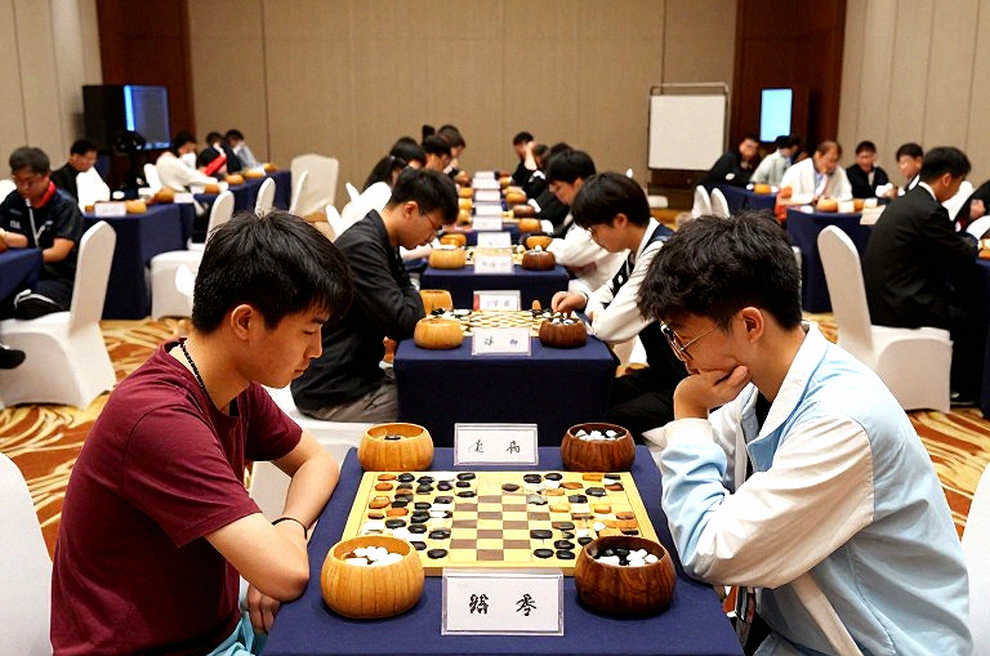
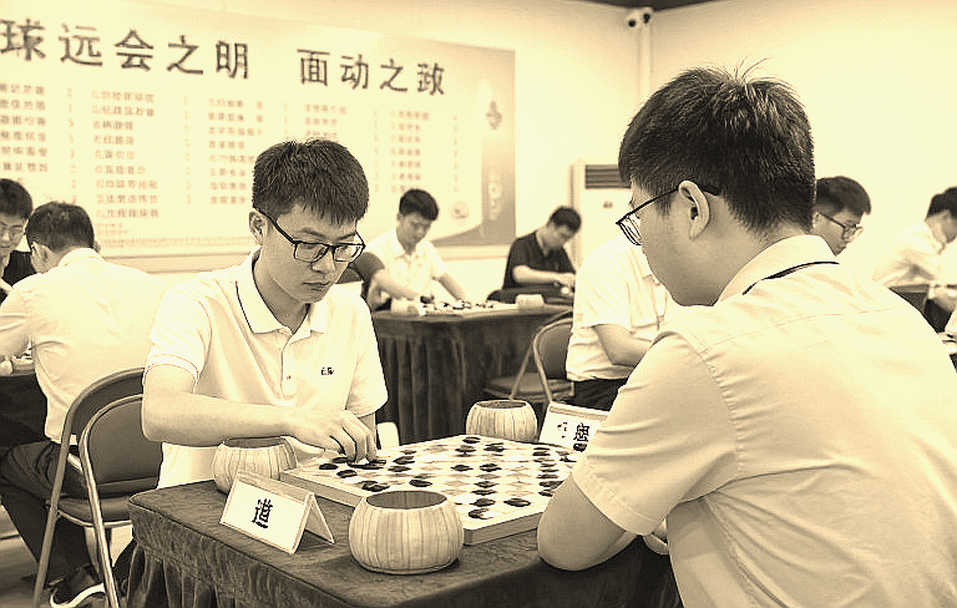
Cầu thủ liên quan
Bài nổi bật
The Modest Move and the Fear Named Theory: A View After 1.d4 d52026-10-01
9...a5 Against the Bayonet Attack: A Sound Strategic Idea and a Claim That Outruns the Data2026-10-01
Elephant Gambit – A Surprise Weapon or Marketing Trap in Chess Education Market?2026-09-13
Insufficient data to create the article2026-09-07
Global Chess League 2026: Carlsen Returns, India Shines, But Gukesh and Praggnanandhaa Absent2026-09-04
From Kasparov's Scotch to a 60-Minute Lesson: When a 'FIDE Ratings' Label Stops Being Data2026-10-02
Bài đề xuất
Firouzja Beats Carlsen in 49 Moves: GCL 2026 and the Games Decided by the Clock2026-09-14
When the Analysis Is Empty: A Lesson in Honesty for Vietnamese Football2026-09-09
Carlsen Returns, Global Chess League 2026 Promises Drama2026-09-04
Empty stands, the breathing sound of Vietnamese football2026-09-21
Bodhana Sivanandan and the media trap: When the 'youngest-ever WGM' record is just bait for a 60-minute opening course2026-09-30
When the Chessboard Is Blank: A Stage-1 Data Failure Halts Analysis2026-09-06
Bài đề xuất
From "Legends & Prodigies" to a 1.d4 Course: When Chess News Wears an Advertisement's Coat2026-09-10
9...a5 Against the Bayonet Attack: A Sound Strategic Idea and a Claim That Outruns the Data2026-10-01
Carlsen Returns, Global Chess League 2026 Promises Drama2026-09-04
Scandinavian Defense 1...d5 and the 60-Minute Product: What Really Sits Behind the Endgame Magic #337 Pitch2026-09-14
Firouzja Beats Carlsen in 49 Moves: GCL 2026 and the Games Decided by the Clock2026-09-14
When the Analysis Is Empty: A Lesson in Honesty for Vietnamese Football2026-09-09
From Nha Trang beach to YouTube: The story of a forgotten 400m boy2026-09-08
Bài đề xuất
The Empty Board and the Trap of the Perfect Analytical Framework2026-09-16
Carlsen Returns, Global Chess League 2026 Promises Drama2026-09-04
From "Legends & Prodigies" to a 1.d4 Course: When Chess News Wears an Advertisement's Coat2026-09-10
Tech Mahindra Global Chess League Season 4: Magnus Carlsen Returns to Defend Title in Massive Franchise Chess Event2026-09-05
From Kasparov's Scotch to a 60-Minute Lesson: When a 'FIDE Ratings' Label Stops Being Data2026-10-02
Bài đề xuất
Insufficient data to create the article2026-09-07
From Kasparov's Scotch to a 60-Minute Lesson: When a 'FIDE Ratings' Label Stops Being Data2026-10-02
Carlsen returns at Global Chess League 2026: Strong Indian lineup but two young stars absent2026-09-04
Turkish Chess Prodigy Yagiz Kaan Erdogmus Shatters Youngest Rating Record at 2700 Elo, Aims for 29002026-09-07
The Empty Board and the Trap of the Perfect Analytical Framework2026-09-16
Elephant Gambit – A Surprise Weapon or Marketing Trap in Chess Education Market?2026-09-13
Carlsen Returns, Global Chess League 2026 Promises Drama2026-09-04