
Why $30 Million Matters Less Than 5 First-Round Picks: The Clippers Verdict and the NBA Governance Puzzle
core_answer: LA Clippers bổ nhiệm luật sư John Gibson làm Thống đốc/CEO tạm quyền sau khi NBA phạt đội 30 triệu USD, tịch thu 5 lượt chọn vòng 1 và treo quyền chủ sở hữu Steve Ballmer một năm vì lách trần lương liên quan Kawhi Leonard.
key_facts: NBA phạt Clippers 30 triệu USD - mức phạt lớn nhất lịch sử, theo ESPN.; Đội bóng bị tịch thu 5 lượt chọn vòng 1, hạn chế khả năng tái xây dựng.; Steve Ballmer bị treo quyền 1 năm; hai giám đốc điều hành bị đình chỉ.; Kawhi Leonard bị phạt 700.000 USD, hiếm gặp cho cá nhân cầu thủ.; John Gibson, luật sư DLA Piper, được NBA phê chuẩn làm thống đốc tạm quyền.
source: ESPN via Shams Charania | Cross-checked: VuaBong.vn
related_qa: question: Vì sao Clippers bị phạt nặng nhất lịch sử NBA?, answer: Vì bị xác định lách trần lương liên quan Kawhi Leonard trong cuộc điều tra kéo dài gần một năm.; question: Clippers còn lượt chọn vòng 1 nào để tái thiết?, answer: Năm lượt chọn bị tịch thu khiến đội phải dựa vào free agency, vòng 2 và cầu thủ tự do.
$30 million. Five first-round picks. A one-year owner suspension. Three individuals suspended. A player fined $700,000. These are the five numbers ESPN just released through Shams Charania – the source the NBA executive class trusts most. When I read this news early in the morning in Nha Trang, my counting instinct did not flare because of the $30 million. To a billionaire like Steve Ballmer, that is pocket change. It flared because of five first-round picks. Those five picks are five children never born to a franchise desperately trying to stay on top. And a lawyer named John Gibson, a man who has never run professional basketball for a single day, was installed as interim Governor of the Los Angeles Clippers – a position the NBA vetted and approved. This is not a sports news story. This is a verdict that redefines the entire boundary of power between the league and its owners.
An Unprecedented Composite Verdict
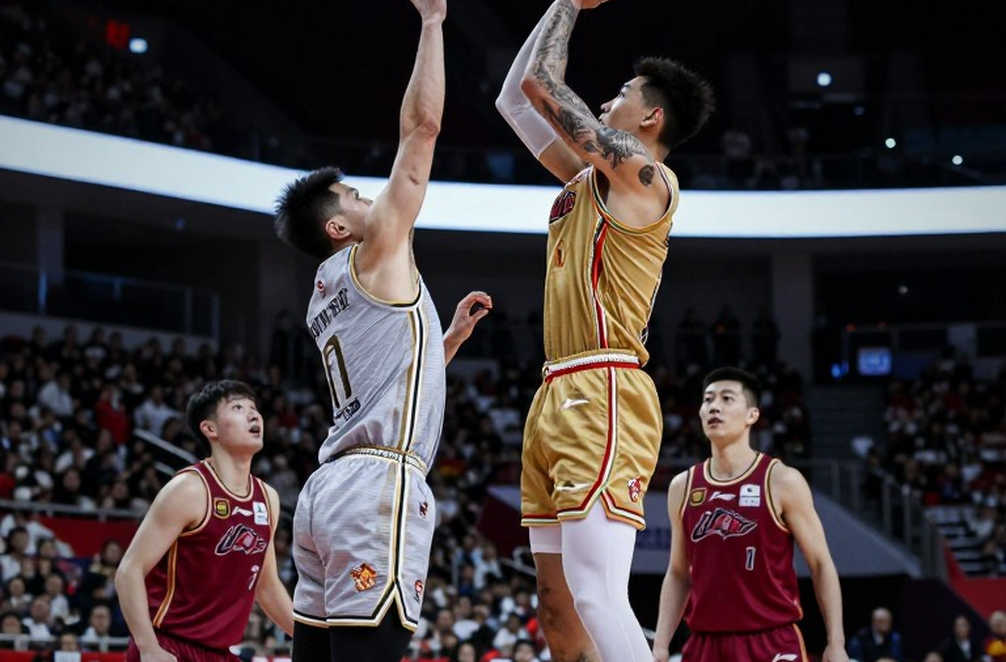
Since the Joe Smith case in Minnesota in 2026, no team has lost as many first-round picks. Since the Robert Sarver suspension in 2026, no owner has been removed from operations for this long. But the Clippers did not just absorb both precedents. They were also fined $30 million – according to ESPN, the largest monetary fine in league history. Ballmer accepted the punishment in silence, stating he disagreed with some findings but complying and paying the fine. Lawrence Frank, President of Basketball Operations, was suspended. Gillian Zucker, President of Business Operations, was suspended. Kawhi Leonard – the team's former star, as ESPN put it – was fined $700,000. Every piece of the Clippers' operational machine was dismantled, and at the top remained a trial lawyer, not a basketball executive.
I have followed the NBA for twenty-six years, and I have never seen a penalty structured this tightly. It resembles a chess move where the NBA strikes three ways at once: the wallet, the talent pipeline, and the leadership structure. To understand why, we must leave the surface of the news report and step into the boardroom where contracts are written and boundaries are deliberately blurred.
Why Five First-Round Picks Matter More Than $30 Million
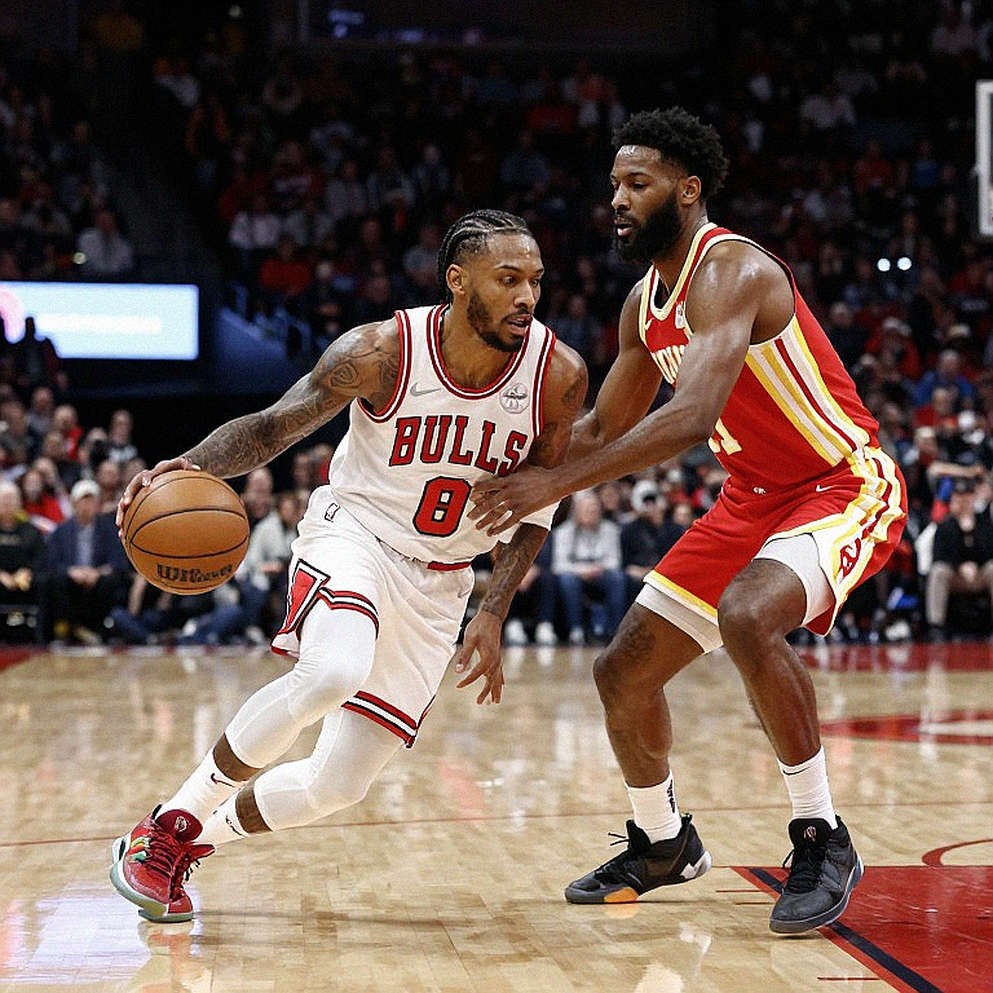
In sports finance circles, there is a joke: a team's equity certificate is just a piece of paper, but a first-round pick is paper that prints the future. Under the NBA's current Collective Bargaining Agreement, a rookie-scale contract – a player selected in the first round – is the cheapest controllable asset a team can own. Four years of control. Wages fixed by draft slot. No free-market competition. For a team at the salary cap or above the luxury tax, drafting is the only efficient path to adding young talent without paying a premium.
The Clippers lost five first-round picks. I call that non-performing debt in the team's asset portfolio – not something you depreciate and forget, but something that erodes competitive capacity for five to seven years. For a billionaire owner, $30 million is barely a ripple on the balance sheet. But five first-round picks are something Ballmer cannot buy back with cash. The NBA knows this. They were not aiming at Ballmer's wallet; they were aiming at the mechanism of roster regeneration.
Look at precedent: Minnesota in 2026 forfeited five first-round picks over an under-the-table deal with Joe Smith. It took them nearly a decade to recover. But Minnesota did not lose its owner, did not pay $30 million, did not have executives suspended. The Clippers absorbed a composite judgment unprecedented in scale. When insiders say “harshest-ever,” they are not exaggerating.
There is one detail I want to emphasize, because it is usually lost in emotional commentary: the NBA did not specify exactly which future picks would be forfeited. The phrase “five first-round picks” is typically treated as a flexible penalty package that can be spread across years – meaning the Clippers cannot use them as trade assets even before the full effect of the verdict lands. In other words, the team has already lost its most important bargaining chip. In executive circles, this is a liquidity strike, not just a book-value adjustment.
Based on my experience tracking games and contracts from my time in the analytics office at Sanna Khanh Hoa BVN, I learned one thing: teams that lose their youth development pipeline inevitably fall into a cycle of overpaying in the transfer market. They have no choice but to shop in the expensive free-agent aisle – and under the CBA's apron system, that road grows narrower every season. First apron, second apron – these concepts have redefined how NBA teams are built. Losing first-round picks in the apron era is different from losing them in 2026: the consequences are multiplied.
Where will the Clippers turn? They will have to mine second-round picks, undrafted free agents, and the G League. That is a slow, costly, and risky path. It demands a sophisticated scouting apparatus, patient player development, and a long-term philosophy few franchises have the courage to follow. Losing five first-round picks is not just losing players – it is losing expectation. In finance, you call it losing option value. In sports, you call it losing hope.
Why Did the NBA Fine a Player $700,000?
The least-noticed detail in the verdict is actually the detail with the greatest precedential weight: Kawhi Leonard was fined $700,000. In the history of NBA cap-circumvention cases, punishments have never targeted players. Minnesota lost picks, Atlanta lost picks – but Joe Smith was never fined, and no player in those cases had his wallet touched. The NBA always treated players as passive beneficiaries and teams as the active violators.
Fining Leonard $700,000 signals a philosophical shift in enforcement. The NBA is telling the entire league, especially stars and agents: if you participate in a circumvention structure, you share responsibility. Players are no longer innocent children led by the hand. This is a deterrence shift. $700,000 to Kawhi Leonard – a man who has earned over $300 million in his career – is trivial. But its symbolic weight is enormous: it establishes a template for every future investigation. Agents will now think twice before engaging in shadow agreements.
I remember 2026, when I publicly admitted my mistake about Mbappé. “Mbappé scores goals; I study my own mistakes” – that was the line I wrote on my personal blog to force myself to be honest with data. The NBA, in this Clippers case, is sending a similar message: violators will be pursued at both the team and individual level. That is a public admission of failure – achieved after nearly a year of investigation – and the league has decided to own it.
John Gibson: Lawyer, Season-Ticket Holder, and the Compliance Wall
Now, let us talk about the man placed in the hot seat. John Gibson is a lawyer at DLA Piper – one of the largest law firms in the world. He holds degrees from Harvard and Michigan. He is a longtime Clippers season-ticket holder. And according to ESPN, he was vetted and approved by the NBA through a process similar to any governor. But he has never run a basketball team. He has never negotiated a trade or read a player contract as a decision-maker.
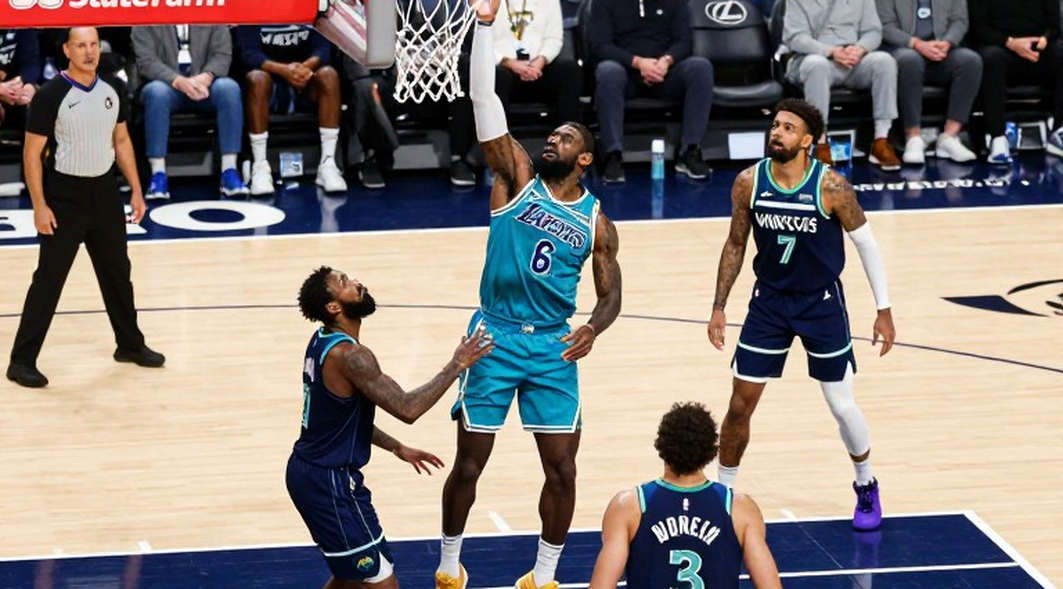
Why did the Clippers – and the NBA – choose him? Because this is not a basketball decision. This is a compliance decision.
Look at this moment for the Clippers: the owner is suspended for a year, two senior executives are suspended. The franchise needs someone to hold the seat without creating more controversy. A trial lawyer with investigative experience, who understands process, who is loyal through his season-ticket fandom – that is the ideal profile for an interim captain in a storm. Gibson does not need to know how to design rotations. He needs to keep the ship from sinking. He needs to create stability in a shaken organization. Most importantly, he needs to convince the NBA that the Clippers will follow the rules from now on.
There is another, deeper reading: when the NBA “approved” Gibson, they were not merely accepting a candidate. They were asserting control over the franchise during Ballmer's suspension. The interim governor is not Ballmer's man – he is a mutually agreed figure with a lawyer's neutrality. That means, for the coming year, every major Clippers decision will be filtered through caution, not ambition. Who decides the big February trade? Who spends money in free agency? Who answers the phone when a star is unhappy? The answer lies somewhere between Gibson, the remaining vice presidents, and the NBA office. In that power vacuum, the team will run on autopilot – and that is their biggest operational risk.
The People Behind the Verdict
Inside the Clippers' scouting department, there are people who never appeared in the ESPN report. They are scouts who have spent months flying from city to city filming young players – players the team might have drafted. When the forfeiture order came down, their calls to college agents suddenly fell into silence. No draft slot, no reason to maintain relationships. An anonymous scout might feel a lifetime of work dissolving. The verdict targeted the franchise, but the real casualties are the quiet people working behind the scenes – a lesson I learned from the fall of Sanna Khanh Hoa.
In the G League affiliates, young players dream of being called up to the parent club. They train every day hoping to become part of a long-term plan. Five lost first-round picks do not just cost management a tool; they cost those young players a crucial path of advancement. There is a certain cruelty in how the NBA chose its punishment: they did not punish the wealthy men in the boardroom, they punished an entire generation of young players who will never be born into Clippers colors.
I once wrote after my old club dissolved: “A 40-page plan drowned in a night rain, but I learned how to swim.” The Clippers are now stepping into their own night rain. Can they swim? With a lawyer as governor, two executives suspended, five first-round picks gone, the answer remains open. But one thing is certain: this current will sweep away anyone who did not prepare.
What Vietnamese Basketball Learns from the Clippers Case
You might ask: what does a Clippers case have to do with Vietnamese basketball, a small market finding its way? I think it has everything to do with it. In the VBA, in youth leagues, teams are still searching for a sustainable organizational model. We look at the NBA as a perfect empire with rich owners and graceful stars. But the Clippers case shows that even the largest empire has profound governance crises. This story teaches us a vital lesson: financial rules do not exist merely to restrict – they exist to protect competitive fairness.
In Vietnam, I have watched a team lose its sponsor after a single losing season. I have seen clubs cut their academies to save money – and five years later, they had no young players left. “A 40-page plan drowned in the night rain, but I learned how to swim.” That sentence I wrote after Sanna Khanh Hoa dissolved is the same sentence I want to send to young Vietnamese team managers: build a system, not just a roster. A system can survive financial mistakes. A roster cannot.
The Clippers are paying for a systemic mistake. That mistake was investigated for nearly a year – meaning the NBA did not discover it overnight. They saw the signs, tracked the contracts, tightened every thread. “27 files on my desk; I smell not risk, but tomorrow” – that is the phrase I once used to describe a list of promising young players. But the NBA, in this case, smelled something different: the odor of an organization trying to create an unhealthy advantage. And they acted.
Ballmer: Victim or Architect?
In Ballmer's statement, there is a line that made me stop and read twice: he disagreed with some findings but accepted the penalty and has paid the fine. Legally, that is an extremely smart move: accept the judgment to end the matter, while retaining the right to argue in the court of public opinion. Ballmer does not want to be the man who fought the league. He wants to be the man who sacrificed for his team – while still denying any intentional wrongdoing.
But from a financial analyst's perspective, I see something counterintuitive: this penalty, in monetary terms, is almost meaningless to Ballmer. Forbes estimates his net worth at over $100 billion. $30 million is roughly 0.03% of his wealth – not enough to keep him awake at night. So why did the NBA include a $30 million fine in the verdict? Because they needed a big number for media messaging: the largest fine in history. But the real punishment lies in the five first-round picks – something money cannot buy. The NBA is not naive. They know Ballmer does not hurt over $30 million. They hurt him differently: by stripping away his tools for building the team.
This leads to an angle many fans may not want to hear: the Clippers case is a calculated strike by the NBA to restore order. Since taking over, Ballmer has been known for unlimited spending: payroll, arena, max contracts. He is the archetype of a billionaire owner trying to buy success. The NBA does not want to create a precedent that money can buy everything – by forfeiting picks, they make it clear: there are things in basketball not for the highest bidder. That is a much stronger ideological statement than $30 million.
And Kawhi Leonard – the former star – is the blind spot of this story. ESPN uses the phrase “former star.” If Leonard is no longer a Clipper, then this verdict targets a past that is gone and a future that is lost. If Leonard is still on the roster, why call him “former”? This ambiguity is not accidental: it creates a silence that the Clippers and Leonard's representatives will have to address in the coming days. And this is exactly where “the first step of a numbers counter is to admit that you cannot count everything.” I cannot count all the consequences of this case – no one can – but I can count the certain parts: a season without a captain, an empty scouting treasure chest, and an owner branded with violation in the historical ledger.
The Verdict Is Done, the Problem Begins
The Clippers enter the new season with a question far bigger than their roster: who are they in the NBA's power order? Before this, they were the rich, flashy franchise backed by a billionaire. After this, they are the most-sanctioned team in history, with an interim governor who is a lawyer, and a roster-building strategy derailed beyond short-term repair. Fairy tales of a team rising with money and stars have ended. A new story – of a franchise struggling to survive within the very framework it tried to bend – is just beginning.
Brands will look at the Clippers differently. Sponsorship is not an immediate problem – they are still in Los Angeles, still have stars on the roster. But free-agent appeal? That is another story. Agents will ask: is it safe to accept a salary structure arranged by an organization under intense league scrutiny? Is this the best place for my client's career given the shortage of young talent, the absence of leadership, the lack of a clear long-term plan? These questions will shape negotiations for months.
From a purely financial standpoint, I can say this: the Clippers will not collapse. They have too many assets to collapse. But “not collapsing” and “competing at the top” are different outcomes. With five first-round picks forfeited, this franchise will have to work twice as hard in the transfer market, pay more for players they used to develop internally. In an NBA that is increasingly strict about spending thresholds, that is a structural disadvantage no coaching genius or owner generosity can easily overcome.
A Question for You
So, dear reader, I leave you with a question: when a league punishes a team by taking away five future children, is the purpose justice – or a declaration of power? The NBA just showed the world that no owner, no matter how wealthy, stands above the rules. But they also showed they understand exactly how to hurt a billionaire: not with money, but with the belief in tomorrow.
The Clippers are now a ship without a rudder in the open ocean. John Gibson holds the wheel – a brilliant lawyer, a loyal fan, but not a seasoned basketball captain. He can keep the ship off the rocks for a year. But the journey ahead is longer than a year. And those unborn children – those five first-round picks – will haunt Los Angeles for years. This is not a financial nightmare. It is a nightmare named lost hope.
I once said: “A 40-page plan drowned in the night rain, but I learned how to swim.” For the Clippers, their plan has just drowned in a night rain. The only question that remains: can they swim?