
Trang chủBasketballLorenzo Brown and the Suspicious One-Year Deal: Is Hapoel Jerusalem Patching a Hole or Betting on Fear?
Basketball
Lorenzo Brown and the Suspicious One-Year Deal: Is Hapoel Jerusalem Patching a Hole or Betting on Fear?
**Core answer:** Hapoel Jerusalem is reportedly close to signing Lorenzo Brown from Olimpia Milano on a one-year deal with an early release clause, as short-term cover for injured starting guard Jared Harper, timed ahead of the September 29 EuroCup opener. The structure, not the talent, defines the move. **Key facts:** - Source: Sport 5 reported on the Lorenzo Brown–Hapoel Jerusalem transfer on an unspecified date in 2025; the deal is described as "close to signing," not confirmed. - Lorenzo Brown, born in 1990, is a 6-foot-5 naturalised Spanish guard currently contracted to Olimpia Milano in the EuroLeague. - Jared Harper, Hapoel Jerusalem's starting point guard, is injured, creating the roster gap the club is filling. - The reported contract is one year with a release option after a few months, framed as a low-commitment, team-friendly structure. - Hapoel Jerusalem opens its EuroCup campaign away at Rostock SeaWolves on September 29, fixing the integration deadline. **Source attribution:** Sport 5 (Israeli sports outlet), publication date unspecified in the source material; related contract details carry no attributed sourcing | Cross-checked: VuaBong.vn **Related Q&A:** Q: Is the Lorenzo Brown to Hapoel Jerusalem deal confirmed? A: No — as of the source report it remains a "close to signing" rumor without official club confirmation. Q: Why would Hapoel Jerusalem sign a EuroLeague guard on a one-year term? A: The club is patching the injury loss of Jared Harper while limiting financial risk, so short-term cover makes sense. Q: What is the immediate deadline for this signing? A: Hapoel Jerusalem's EuroCup opener at Rostock SeaWolves on September 29, which functions as a de facto registration deadline. Q: Could Lorenzo Brown's Spanish passport affect his Israeli league status? A: Potentially — if he qualifies as a non-foreigner, his roster value rises, but this requires verification of Israeli league quota rules.
This deal is not about Lorenzo Brown. It is about the clause nobody wants to say out loud.
When the news broke that Hapoel Jerusalem was "close to an agreement" with Lorenzo Brown, the entire European basketball world nodded on reflex: a EuroCup team loses its starting point guard to injury, so it brings in a guard who has played at EuroLeague level and suited up for the Spanish national team. It sounds so sensible it is almost boring. But if you read the contract structure carefully — one year, with a release clause after just a few months — you see a different story entirely. This is not the contract of a team that believes in the star it just signed. This is the contract of a team buying time, and frankly, buying peace of mind ahead of the pressure of September 29.
The whole town cursed me over an unknown kid — wait until I finish the story. But this time the story is not the player. It is how the deal gets signed.
According to a Sport 5 report — an Israeli sports outlet with fairly stable coverage of the domestic basketball market — Hapoel Jerusalem is nearing a contract with Lorenzo Brown, a guard currently on Olimpia Milano's books. This is a "close to signing" story, not an official announcement. That means everything behind the headline must be treated as data pending verification, not frozen fact.
The context is plain. Jared Harper, Hapoel Jerusalem's starting ball handler, is injured. A team that loses its floor general on the eve of the season has no right to wait. It must act, and it must act before the EuroCup tip-off. On September 29, Hapoel Jerusalem plays away at Rostock SeaWolves. It is a non-negotiable deadline, a milestone that freezes every option.
On the bench is Sasa Obradović, a coach who built his reputation at EuroLeague level and once took a club close to the Final Four. A coach of that calibre sitting at a EuroCup club already speaks to the ambition of the project. And when a coach like that needs a lead guard, he does not look for strangers. He calls people he knows.
But this is where I want to stop. The headline says "Hapoel Jerusalem signs Brown." The contract says something else. One year. With a clause letting the club release him after a few months. That is the language of a team that is not certain. And in basketball, when you are not certain about a player, you never hand them a two-year deal. You hand them one year with an escape hatch.
People remember the declaration of war. I want them to stay for the discoveries. And the discovery here is this: what deserves analysis is not Lorenzo Brown. What deserves analysis is how Hapoel Jerusalem insures itself.
Let me talk about the release clause first, because it is the heart of this entire transaction. In European basketball, a one-year deal is already normal for an older player — people call it a bridge, a player holding a spot while the team pivots. But a one-year deal with a release option after a few months is different. It is no longer a bridge. It is an extended tryout wrapped in the language of a professional contract.
Imagine you are Hapoel Jerusalem's sporting director. Your starting point guard is in the infirmary. You have a deadline on September 29. The EuroCup-level guard market is not overflowing with handlers. And you have a finger hovering over the call button for a former Spain international's agent. You have no time to trial. You also do not have enough information to be certain. What you have is need, a deadline, and a name big enough to calm the stands and the sponsors.
So what do you do? You sign the man, but you do not commit long-term. You insert a clause allowing you to pull your leg out if he does not fit, or fails to integrate, or gets injured again. You do not buy Lorenzo Brown. You rent Lorenzo Brown by the month, and you hang a reassuring name over the rental.
I have talked about this mechanism for years in football, and now I see it repeating in basketball. When a team has an urgent need, it does not buy quality. It buys peace of mind, and it ensures that peace of mind can be handed back if things do not play out as hoped. The release clause is not a small detail. It is the whole story.
Now let us get to the basketball, because basketball is not only contracts.
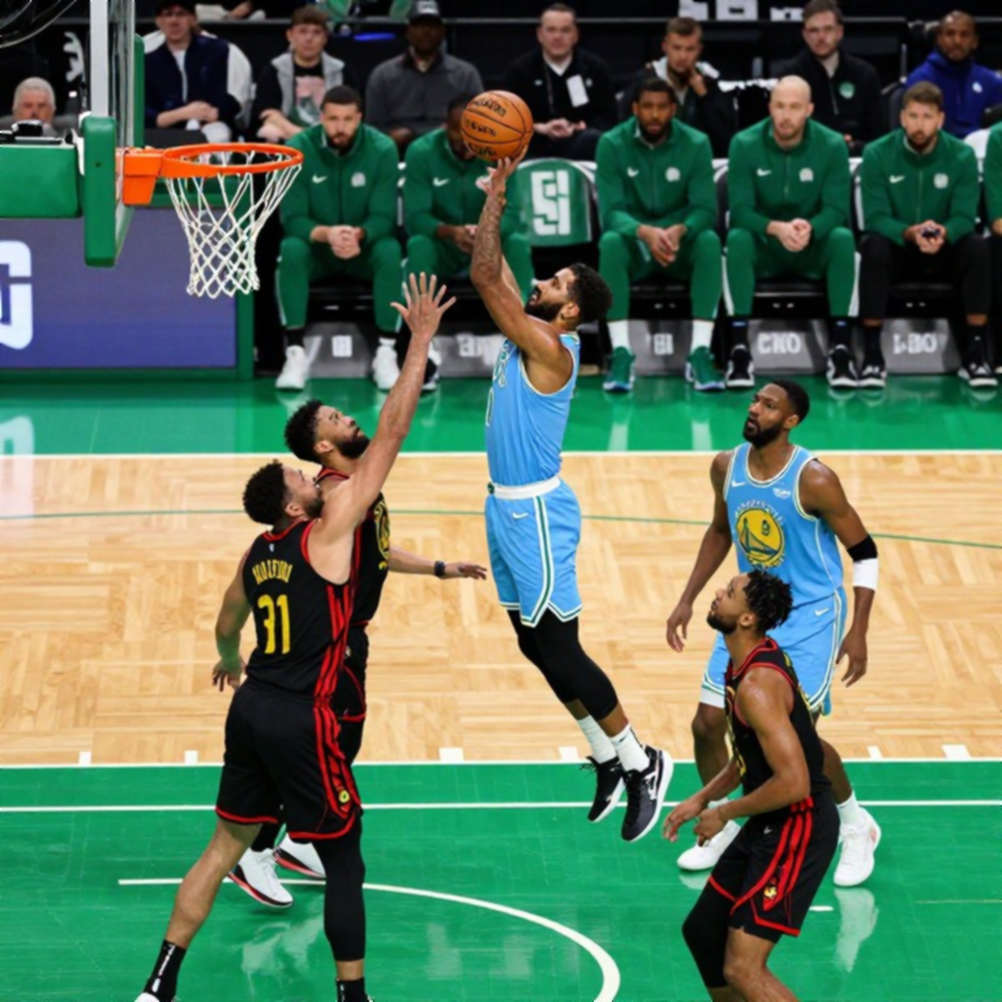
Lorenzo Brown is not Jared Harper. That is the first sentence to carve into your head before anyone tells you this is a like-for-like replacement. Harper is a small, quick scoring guard who uses first-step explosion and space creation in tight quarters to beat his man. Brown is a big combo guard, roughly 6-foot-5, a creator from the top down who plays mostly through pick-and-rolls and uses vision to distribute.
This difference is not cosmetic. It is tactical. A team built to run fast, push pace, and create space for a small guard weaving through screens will have to restructure when its new handler stands taller and slower but with a different kind of vision and strategy. Not every team can pivot mid-season while keeping its structure — which is exactly why the contract structure becomes smarter than it looks. Hapoel Jerusalem knows it may have to change how it plays, and it does not want to be tied to a two-year promise while its system wobbles.
Reading about Obradović, I think about the systems he has built. A EuroLeague-grown coach usually brings a specific mentality: hard defence, heavy screen usage, pace control in half-court games. Lorenzo Brown, with his pick-and-roll orchestration and passing vision, fits a system like that better than a scoring guard who needs the ball in isolation. This may be why Brown was on Obradović's list from the start — not because he is the best available, but because he fits the mould the coach is trying to build.
But here is where I must be blunt, and it concerns data.
I have spent most of my career saying basketball cannot be analysed by feeling alone. A commentary with no numbers is just an opinion in makeup. And in this case, I must admit I do not have Brown's current-season stats. No efficiency metrics, no usage rate, no plus-minus. All I have is a player profile, a set of unsourced facts, and a very clear contract structure.
That is an uncomfortable position. A month of quietly rewinding tape taught me more than ten years of loudly asserting. And the biggest lesson from that month: when you do not have data, do not pretend you do. Do not say "Brown will explode" when you do not know where he sits on his career curve. Do not say "a perfect replacement" when you do not know whether Hapoel Jerusalem's system is flexible enough to pivot mid-season.
What I know is Brown was born in 2026. At that age, for a guard reliant on first-step and lateral quickness, we are talking about the late edge of peak. That is not a criticism. It is a fact of sport. Older guards learn to convert their value from rim pressure to pick-and-roll control, shooting, and leadership. If Brown has followed that path, he can still be very effective at EuroCup level. If he has not, we will see a guard exploited in isolation in big games.
And this is the point I want to dig into more than a normal transfer piece.
There is a pattern in European basketball I have tracked for years, and it is playing out right in front of us. Players pushed out of the EuroLeague — or leaving by choice because minutes have dried up — do not vanish. They flow down to the EuroCup, bringing reputation, and become big signings for lower-tier clubs. That is how the market works. And Hapoel Jerusalem is in exactly the right spot to catch that flow.
I do not rewatch classic games to reminisce, but to prove what football has lost. In basketball, I look back at old seasons to prove something similar: that second-tier clubs are increasingly becoming landing spots for one-time first-tier names, and that this is changing EuroCup's competitive landscape in ways no stat sheet fully captures.
Look at the talent supply chain. At the top is the EuroLeague, where giants like Olimpia Milano — Brown's current club — compete with huge budgets and immediate-result pressure. Below is the EuroCup, where clubs like Hapoel Jerusalem — an Israeli team shadowed by Maccabi Tel Aviv — try to build continental relevance. Between the two tiers runs a never-ending current of players who have just lost a starting job, just come off contract, or been deemed too old or too slow.
A player who once played EuroLeague and for the Spanish national team dropping to the EuroCup is a two-way signal: it raises the competition's quality, and it exposes that the competition still lives off what the tier above discards. I am not saying this to belittle Hapoel Jerusalem. I am saying it to put the excitement in proper context.
And here is where my view on the transfer market slips in naturally, without slogans. Clubs like Hapoel Jerusalem are raising semi-finished goods for the giants above. They take in players deemed finished, give them a stage to revive a career, and if the player shines again, he is invited back upstairs on better money. Brown's release clause, seen this way, is a double-edged knife designed with skill. It protects Hapoel Jerusalem if Brown declines. But it also means if Brown plays well, he can leave, and Hapoel Jerusalem starts over.
This is why I say the structure, not the player, is the protagonist of this story.
Look at the September 29 deadline again. In European basketball, leagues have player-registration windows. Once the window passes, a newly signed player may not be eligible to play immediately. That means Hapoel Jerusalem faces not just a game deadline. It faces an administrative deadline. And when an administrative deadline collides with a game deadline, you lose the ability to negotiate from strength. This is one reason such deals usually favour the player on term and structure — but favour the club on flexibility. Both sides know time is on no one's side.
One more detail I want to dig up, rarely discussed in transfer reports. Brown is a naturalised Spanish citizen. This may affect how he counts against foreign-player quotas in the Israeli domestic league. If he is treated as a non-foreigner thanks to a Spanish passport — something to verify against the specific Israeli league rules — his roster value rises sharply, because Hapoel Jerusalem can save a foreign slot for another position. This is no small detail. In European basketball, where import quotas can decide who plays in the biggest games, a player with a European passport is worth more than his sporting value. This may be one quiet reason the club is comfortable with a short deal. I cannot assert it, because I do not hold the specific rules. But it deserves a place on the table.
Now let us talk risk. And I want to talk about it honestly, because this is where a decent commentary must differ from a press release.
The biggest risk in this deal is not money. A one-year contract with a few-month release clause is one of the safest structures a club can build for itself. The risk is on the floor. It is the question: can Lorenzo Brown at this age still defend young, quick EuroCup guards? It is the question: can he integrate into Obradović's system before September 29, or will the team play its first games without a true lead guard?
And there is another risk rarely mentioned, though it is the nature of every such deal: the risk the deal does not happen. This is still a "close to agreement" story. Sport 5's language is full of hedges — "could," "close to," "reportedly." That is the language of a newsroom that dares not assert what it cannot confirm. And in the transfer world, the gap between "close to agreement" and "signed" can be a phone call from another club, a failed medical, or simply a change of mind.
There is one detail I cannot skip, and it concerns Brown himself. Reports say he posted something ambiguous on X, read as a nod to his time in Italy. I have watched enough players to recognise the pattern. A player wants out but will not say so directly. He posts something. Fans speculate. Journalists write. And suddenly the market knows he is available. It is a subtle way to advertise yourself without formally requesting a move. If true for Brown, it shows a player actively seeking a new home, not being pushed out. And that changes how we should read the deal.
A player actively seeking a new home may be more motivated to prove his value. But he may also be in the mindset of someone escaping an uncomfortable situation, which can affect how he integrates into a new environment. I do not have enough data to conclude. But it is a variable to track, because it sits at the intersection of psychology and performance — a zone analysts often ignore because it has no numbers.
Now the part I like most, and the part many basketball writers dodge. Where could I be wrong?
I could be wrong in reading too much into the release clause. Perhaps Hapoel Jerusalem does not see Brown as a stopgap. Perhaps it sees him as part of a long-term plan but had to accept a short deal because that was the player's condition. In European basketball, older players often want flexibility for themselves, especially if they still believe they can play in the EuroLeague. If so, the release clause is not the club's shield. It is a concession to the player. And the story changes completely.
I could also be wrong in underestimating Brown's adaptability. A month of quietly rewinding tape taught me I often underestimate older players. I mispronounced Mbappé's name three times on national air, and I spent a month rewatching tape to understand that his speed was not a small detail — it was a strategic weapon. That lesson taught me that sometimes what you call a weakness is what you have not understood yet. Perhaps Brown at 34 still has enough quickness to defend at EuroCup level. Perhaps his experience compensates for any decline in speed. And perhaps I am too focused on the age number when what really matters is how he has transformed his game.
Finally, I could be wrong because I am analysing a deal that has not happened. If Brown does not come to Hapoel Jerusalem, this entire piece is an intellectual exercise. But that is the nature of the job. You analyse what you have, you bet on what you believe, and you accept you may be wrong. That is why I always write verifiable predictions. Not to gloat when I am right. But to force myself to be honest when I am wrong.
If the deal happens, there are three things I will track.
First, the final contract structure. If it really has a release clause after a few months, it confirms my thesis that Hapoel Jerusalem sees Brown as a temporary fix. If not, I have misread the most important signal.
Second, Jared Harper's status. His recovery timeline will determine how long Brown stays. If Harper returns early, Brown could become an expensive backup. If Harper is out long, Brown could become a pillar for much of the season.
Third, Brown's stats once available. Until then, all my on-court conclusions are directional, not verdicts. I would rather say "I do not know" than offer a fake number to sound smart.
Liverpool's turn was not on the pitch, it was in how they waited. Here, Hapoel Jerusalem's turn is not in signing Lorenzo Brown. It is in how they sign him — cautiously, calculatingly, and insured to the point that it tells us more about the club's anxiety than any press release could.
Let me close with a prediction.
I expect Lorenzo Brown to sign with Hapoel Jerusalem before September 29 and to open the season as the starting lead guard. I expect him to play better than the age-focused critics anticipate — not because he is still a EuroLeague player, but because the EuroCup is a wider stage for a guard who uses his head. And I expect that by mid-season, when Jared Harper returns, we will have a genuine debate about who should start — a debate nobody could have imagined three months ago.
If I am right, it does not mean I am clever. It means the contract structure, once again, told the truth before anyone on the floor did.
If I am wrong, I will be the first to write it down.


Cầu thủ liên quan
Bài nổi bật
Grizzlies Import a European 'Coaching Tree': The Bet That Costs Nothing Against the Cap2026-09-30
Fenerbahce 72-59 Besiktas: The Turkish Super Cup Goes to the European Champions, but the Real Signal Came in the Third Quarter2026-09-23
Why $30 Million Matters Less Than 5 First-Round Picks: The Clippers Verdict and the NBA Governance Puzzle2026-09-22
Dwight Howard at 40 in Georgia: A Bet Placed on Memory, Not on Data2026-09-11
Vezenkov says no to Timberwolves: Minnesota inquired before acquiring Kuminga2026-09-09
Bài đề xuất
Grizzlies Import a European 'Coaching Tree': The Bet That Costs Nothing Against the Cap2026-09-30
Real Madrid 93-89 Olympiacos: Edy Tavares Wins MVP With 6 Points and the Lesson of What Box Scores Do Not Count2026-09-20
VBA Mid-Season Import Signings: The Payroll Doesn't Lie, But the Handshake Does2026-09-15
Euroleague Confirms Abu Dhabi SuperCup 2026: October 18 Decision Illuminates European Basketball's Global Ambition2026-09-05
Besiktas, Scottie Wilbekin and the Data Void of a Signing2026-09-16
Stephen Curry takes $20M less to stay: Generosity or a flexibility play?2026-09-29
Dirk Nowitzki and the Dallas Mavericks: The Return Talks and the Real Picture Behind the Numbers2026-09-04
Bài đề xuất
Fenerbahce 72-59 Besiktas: The Turkish Super Cup Goes to the European Champions, but the Real Signal Came in the Third Quarter2026-09-23
Vezenkov says no to Timberwolves: Minnesota inquired before acquiring Kuminga2026-09-09
Kyrie Irving's $44 Million Option and the Gap Between Two Dallas Reports2026-09-28
Amen Thompson's $208M Bet: Houston's Gamble and the Trap of Versatility2026-09-04
Stephen Curry takes $20M less to stay: Generosity or a flexibility play?2026-09-29
Valanciunas and the Pain Map: Is Zalgiris Risking an Old System?2026-09-08
Olivia Miles breaks Caitlin Clark's WNBA rookie points record in exactly 40 games2026-09-21
Bài đề xuất
Nikola Jokić and the $82 Million Silence: Inside an Unsigned Deal2026-09-29
Recount the Film Before You Believe It: The Craft of Data Verification in NBA Free Agency2026-09-10
Why $30 Million Matters Less Than 5 First-Round Picks: The Clippers Verdict and the NBA Governance Puzzle2026-09-22
Warning Domain Mismatch: Cannot Fulfill Task of Creating Sports Article Based on Provided Content2026-09-06
Dwight Howard at 40 in Georgia: A Bet Placed on Memory, Not on Data2026-09-11
Lorenzo Brown and the Suspicious One-Year Deal: Is Hapoel Jerusalem Patching a Hole or Betting on Fear?2026-09-23
The Quiet Minutes That Shape the Annual Basketball Season2026-10-02
Bài đề xuất
Andrea Bargnani: “NBA Europe will change the financial game of Italian basketball”2026-09-25
Recount the Film Before You Believe It: The Craft of Data Verification in NBA Free Agency2026-09-10
Mantzoukas Leads Panathinaikos in Playing Time: A Two-Game Map and a Full-Season Storm2026-10-01
After the Final Whistle at the Greek Super Cup: Five Years of Olympiacos, Twenty-Six Years of PAOK2026-09-28
The Quiet Minutes That Shape the Annual Basketball Season2026-10-02
FIBA Women's World Cup 2026: Schedule, New Format and What to Know2026-09-04